Nombre del autor: henrysolis68aracsa.co.cr

January sales drive online retail growth following subdued ‘Golden Quarter’

Retail growth rose to 1.7% in January, after sales were flat in December at 0.2%, and online retail spend growth (excluding groceries) reached 5.7%, with its share of overall retail spending reaching its highest level since January 2022, at 59.2%. That’s according to the latest data from the Barclays Consumer Spend report, which suggests UK consumers held out to shop the January sales from the comfort of home, following a subdued Golden Quarter for many retailers. Sales of clothing for the period increased by 3.1%, while pharmacy, health and beauty sales rose 8%, and general retailers and marketplaces saw 4.8% growth – up from 1.1%, 4.3%, and 2.6% respectively in December. Research on behalf of Barclays, carried out between 23-27 January by Opinium Research, which surveyed a representative sample of 2,000 UK consumers by age, gender, region, and income group, found that 50% plan to focus more on their wellbeing in 2026. Additionally, amid the growing popularity of weight-loss drugs, 17% of consumers have spotted more GLP-1-friendly options on supermarket shelves, rising to 28% for those aged 18-34. Barclays sees nearly 40% of the nation’s credit and debit card transactions, providing a unique insight into UK consumer spending, which increased 0.8% in January. However, that was considerably less than the latest CPIH inflation rate of 3.6%. Essential spend fell 1.1%, marking six months of decline, but discretionary spending grew 1.6% from 25 December 2025 – 22 January 2026, versus the same period last year, again led by the strong performance of online retail over the January sales period. Karen Johnson, Head of Retail at Barclays, said: “Both big and small screen entertainment thrived last month, helped by the buzz around awards season favourites, and people spending more time at home. “This also resulted in growth for online retail, as shoppers seemingly held out for the January sales.” Consumer confidence remained “stable” in January, with most measures on par with December, when they improved marginally. Confidence in household finances remained at 66%, up two percentage points from November (64%), while confidence in consumers’ ability to live within their means also stayed flat at 71%. Jack Meaning, Chief UK Economist at Barclays, said: “Improving consumer confidence is absolutely key to the UK’s economic outlook in 2026. With that in mind, the stabilisation in this month’s survey is an encouraging step in the right direction. “With inflation set to fall quickly in the coming months, interest rates on course to ease and some early signs of resilience in wider activity, the scene is set for confidence to pick up, supporting growth in spending as the year goes on.”

January sales drive online retail growth following subdued ‘Golden Quarter’ Read More »

Show report: Scoop sets the tone for 2026 with standout collections

Taking place at Olympia National in London from 8-10 February, contemporary women’s fashion trade show Scoop delivered plenty of newness and positive energy. TheIndustry.fashion went along on day two to hear from some key exhibitors – with many debuting some standout brands for the UK market. Natalie Millard, CEO, and Sandra Verstraten, founder, Self Service Showroom, showing Casbah, One Tee, Les Tricots de Léa, MOS the Label, Flotte and Billion Avenue. The show has been amazing for us so far. The world is in a strange place, but everyone seems a bit more optimistic. The collections that we gravitate to are all about happiness and joy. They are unique, with great detailing, and are really well priced. Customers feel emotion when they buy and wear them. We are showing six brands here and we’ve had some great responses from buyers that we always see, as well as lots of new buyers – which I think is fantastic. We do place orders here, though some buyers like to come and look at the show and then follow up with an appointment at our Marylebone showroom. It’s a real combination. We always do Scoop, as we like to showcase our new brands. People come for real discovery of what’s new in the market. Where we’ve got new brands showing for the first time, like Casbah, One Tee, Les Tricots de Léa, MOS the Label and Billion Avenue jewellery, distribution is open for the first time, so a lot of buyers want to get in there first to secure exclusive distribution in their area. They are writing orders here. Casbah is particularly getting a great reaction. It’s brand new from Paris, with design themes around Algeria and Morocco. It’s all forward order – for July/August – and it hasn’t even hit e-commerce for this season yet. It’s about to launch online. That’s why it’s so exciting, because people don’t know about it yet. There are lots of key pieces with Casbah. The outerwear is fantastic, and there’s plenty of lace, embroidery, appliqué and beading. Some of the jackets are reversible, and there’s lots of knitwear, including pieces with detachable crochet collars. They are just really fun pieces. One Tee is also getting a lot of interest at that entry price point. There are lots of printed T-shirts, including one with ‘Celine is a friend’ on the front, as well as sweatshirts and knitwear – some with towelling letters and numbers in an American college varsity style. Jess Quinton, founder and Creative Director, Quinton + Chadwick We’re a small niche brand with a focus on accessories and jumpers. It’s all made in Scotland and we will not use anything synthetic. All of our yarns are made in the UK. Key products include scarves, gloves, bobble hats, berets and Fair Isle knitwear. We use 100% British lambswool, Geelong wool and angora – what we call ‘noble’ fibres. The show has been okay so far; there aren’t many high-end shows anymore – and we are quite a high-end brand. These are tough times, but we have a particular thing going on and we have seen the buyers we expected to see. We have a lot of regulars, and we sell to a wide variety of accounts – from Liberty to the Royal Academy, as well as lots of independent boutiques. Our business is probably split 60/40 between wholesale and direct to consumer via our website. The latter is growing, but it’s not without its blips. The UK is our biggest market now – thank you, Brexit! Actually, America was our second biggest market before Trump, and pre-Covid it was Japan. I don’t think we’re alone in that. We’ve done Scoop since it began 15 years ago, and we do write orders here. It’s all autumn/winter forward order. We’ve possibly picked up some new accounts – there’s been a bunch of new enquiries to follow up on. New for AW26 is an intarsia design (for scarves), a jumbo graph knit and a modern tartan. We work in colour stories and new for this season is what we are calling ‘hot tropics’, ‘winter beach’, ‘forest’ and ‘moorland’. It’s all quite poetic! Sarah Charlesworth, owner of Intimates Lingerie LLP, showing Bed Head We’re a family-owned agency and distribution company specialising in premium international brands. This is the first time we’ve shown Bed Head at Scoop, though we’ve shown previously with other brands. It’s been really good so far, with lots of people loving the look, touch and feel of the product. We’ve taken some nice orders and we have some buyers coming back. Overall, the mood seems very positive. Bed Head is an American brand that’s been going about 12 years. It has its own stores in America and works with retailers such as Anthropologie and Neiman Marcus. This is the first time it’s been outside of the US, so it’s exciting. I’d describe it as lifestyle sleepwear in organic cotton, cotton jersey and flannel. It’s really about quality, design and really fun prints. It offers something a little bit different from what’s in the market at the moment. At the top end, we have Liberty print pyjamas in premium lawn cotton, and there are also fun Christmas and Valentine’s themes. There’s something for everyone, including a beautiful core collection – such as striped pyjamas that come in different colour variations in-season. The striped offer will be held here in the UK for replenishment as our basics business, while the rest is forward order. The majority of the range features two-piece pyjamas – either with shorts or long leg bottoms -though we do have a few sleep shirts, but only in selected prints. We also do three robes. It’s all women’s at the moment, though in America they do men’s and children’s collections too. They even do a family pet collection, so you never know, we might be looking after everyone in the household! As a company, we have about 10 brands – some of which we’ve worked

Show report: Scoop sets the tone for 2026 with standout collections Read More »

LuxExperience returns to profit as transformation gains traction post YNAP acquisition

LuxExperience Group, made up of Mytheresa, YOOX, Net-A-Porter and YOOX, has reported a return to adjusted EBITDA profitability and top-line growth in the second quarter of FY26. This marks a key milestone in its transformation strategy post-YOOX Net-A-Porter (YNAP) acquisition. For the three months ended 31 December 2025, the digital luxury group delivered net sales growth of 1.1% on a reported basis, or up by 5.7% at constant currency, reaching €645.1 million (£561.4 million). Gross Merchandise Value (GMV) was up by 0.2% reported, or up by 4.7% at constant currency to €684.8 million (£596 million). Most notably, the group returned to positive adjusted EBITDA of €13.2 million (£11.4 million), representing a margin of 2%, a significant improvement compared with previous quarters and a signal that its restructuring programme is beginning to yield results. Chief Executive Officer, Michael Kliger, said: “We are extremely pleased with the results of the second quarter. The initiated turnaround at ex-YNAP already shows good results with growth and a return to adjusted EBITDA profitability at Group level. “Our proven ability to deliver profitable growth at Mytheresa is now being applied to the newly acquired businesses.” The performance confirms LuxExperience’s medium-term targets under its transformation plan of €4 billion (£3.48 billion) in net sales and an adjusted EBITDA margin between 7% and 9%. Mytheresa once again led performance across the group, continuing to outpace the wider luxury market. The platform reported net sales up by 8.8% reported to €242.7 million (£211.1). GMV increased by 9.9% reported to €268.9 million (£234 million). Neta-A-Porter and Mr Porter showed improvement following a challenging first quarter. Net sales were down by 1% reported, but up by 6% at constant currency to €277.1 million (£241.1 million) compared to 10.8% decline reported in Q1. In the Off-Price YOOX division, net sales were down by 7.3% to €125.3 million (£109 million), marking an improvement from the 16.5% decline recorded in Q1. LuxExperience also confirmed the planned sale of the assets powering The Outnet to The O Group for $30 million (£21.9 million) in cash, subject to inventory adjustments. Looking ahead, LuxExperience narrowed its full-year guidance. The group now expects FY26 GMV between €2.5 billion and €2.7 billion (£2.18 billion and £2.35 billion). It forecasts an adjusted EBITDA margin between negative 1% and positive 1%. Having completed the YNAP acquisition in April 2025, LuxExperience is positioning itself as a profitability-focused digital luxury group. As Kliger said: “As a Group we truly possess the secret sauce in digital luxury.”

LuxExperience returns to profit as transformation gains traction post YNAP acquisition Read More »

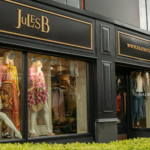
Jules B forced to shut Newcastle store following ‘ram raid’

North East-based independent retailer Jules B has closed its store on Osborne Road in Jesmond, Newcastle, “until further notice”, following a ram raid at 3.15am yesterday morning. In a statement posted on Facebook, Jules B said it was “deeply saddened” to report that the shop was “severely damaged”, and will take time to repair before it can reopen. It’s the latest setback to hit the retailer following the forced closure of its two stores in Kendal, Cumbria, in November 2025, as it cited a “challenging economic climate and the sharp rise in in operating and labour costs”. Both the men’s and women’s stores had been established in the market town for over two decades. Prior to that, in March 2024, Jules B announced it had completed a Company Voluntary Arrangement (CVA) following a “major cyber attack” in September 2023, which severely rocked the business. Addressing its customers, the latest Facebook statement reads: “This has been a real shock to our team, and after everything the past few years have thrown at us, it’s another tough hurdle to face. Your kindness, loyalty and encouragement are what keeps us going during moments like this, and we truly can’t thank you enough for that support. “While we work on getting back on our feet, you can still shop with us online at julesb.co.uk, where we’ve put together some amazing bargains as part of our final reductions promotion. We’ll keep you updated as things progress.” No-one is reported to have been injured in the ram raid, and it’s as yet unclear as to what stock, if any, was taken. Jules B was founded in 1984 by husband and wife team Julian and Rhona Blades.   View this post on Instagram   A post shared by Jules B | Luxury Fashion Retailer (@julesb)

Jules B forced to shut Newcastle store following ‘ram raid’ Read More »

FCA wants buy now, pay later sector to ‘thrive’ as firms prepare for regulation

Buy now, pay later customers will have clearer information and must undergo proportionate affordability checks under stronger protections coming into force from July, the City regulator has said. The sector will come under the the Financial Conduct Authority’s (FCA) regulation from 15 July 2026, and lenders will need to be authorised by the regulator to provide BNPL products. BNPL firms will also be subject to the Consumer Duty, which the FCA oversees. The duty requires financial firms to put customers at the heart of what they do, including when dealing with customers and designing products. BNPL options often appear at online checkouts and they enable people to spread the cost of purchases, which for some people, could make their payments easier to manage. But the products have been controversial, with concerns that some people could be overstretching themselves financially and making borrowing problems worse. The FCA said that, under its supervision, consumers should receive clear, upfront details about their agreement, including when payments will be due, amounts, and what happens if they miss a payment. Lenders must also carry out proportionate checks to make sure customers can afford to repay what they borrow before offering BNPL. BNPL firms will also need to offer support to customers in financial difficulty, and, where appropriate, direct them to free debt advice. If something goes wrong, consumers will also be able to complain to the Financial Ombudsman Service (FOS). The regulator said that its proportionate approach will make sure BNPL can be accessed by people if lending is sustainable and will also encourage firms to innovate and compete effectively in consumers’ interests. Sarah Pritchard, Deputy Chief Executive at the FCA, said: “We want the buy now, pay later sector to thrive – it provides an important source of credit to many – and we will continue to support firms who want to develop innovative new products. “But crucially, no-one should be lent to if they’re unable to repay because that could worsen their financial situation. Now Parliament has given us the powers, we’re putting in place proportionate protections for the 11 million people who use it.” The BNPL market has grown significantly in recent years, to reach over £13 billion in 2024, the FCA said. According to its 2024 Financial Lives Survey, 20% of UK consumers, equating to 10.9 million adults, used BNPL in the 12 months to May 2024. People who are struggling with their finances can search for guidance on dealing with debt on the Government-backed MoneyHelper website. Firms will be able to register for the temporary permissions regime between 15 May 2026 and July 1 2026. Firms will have six months from the date the regime comes into force to apply for full authorisation. Peter Tutton, Director of Policy, Research & public Affairs at StepChange Debt Charity, said: “Buy now, pay later can be a helpful way for people to spread costs. But like any form of credit, it carries risks when repayments become difficult. The absence of FCA regulation until now has only heightened the risk of financial harm for those relying on BNPL. “Going forward, people using BNPL products will be protected by affordability checks, consistent support from lenders and access to the Financial Ombudsman if things go wrong – these are all essential safeguards for borrowers using any type of credit.” Rocio Concha, Which? Director of Policy and Advocacy, said: “Buy now, pay later has become a popular payment method for many consumers – especially for those managing tighter budgets. “However, because it has so far been unregulated, consumers paying this way haven’t been made sufficiently aware of the risks attached with this form of credit, such as the late fees which may apply and the potential of getting into debt. “Which? has campaigned for years for BNPL to be regulated and clearer information, proper affordability checks and access to redress when things go wrong should give shoppers proper protections should they choose this payment method.” A spokesperson at BNPL provider Clearpay said: “We welcome regulation, which will establish a consistent operating environment and clear compliance standards for all providers.” A Klarna spokesperson said: “These new rules will raise standards across the market.” And a spokesperson for banking and finance body UK Finance said: “It’s right that the product is regulated and our members welcome the application of more flexible regulation through the FCA.”

FCA wants buy now, pay later sector to ‘thrive’ as firms prepare for regulation Read More »

The Interview: Kaiia The Label global marketing boss on turning TikTok momentum into long-term growth

Founded in Manchester in 2022, Kaiia The Label is part of a new wave of digitally native fashion brands built not on catwalks or wholesale floors, but on community, content and conversion. The womenswear brand has carved out a fast-growing following by focusing on comfort-led, everyday dressing – think elevated co-ords and off-duty essentials. Social commerce sits at the heart of Kaiia’s rise. The brand has become one of the fastest-growing fashion retailers on TikTok Shop, using creator-led storytelling and live shopping to turn cultural relevance into commercial momentum. Operating primarily through a direct-to-consumer model, Kaiia has scaled rapidly by meeting its customer where she already is – on her phone – while building a highly engaged digital community in the process. Led by CEO and co-founder Qasim Akhlaq, who also founded Public Desire, Kaiia is now entering its next phase of growth as it evolves from viral favourite to more established fashion player. We spoke to Emily Frazer, Head of Global Brand and Marketing, about shaping that transition, strengthening brand foundations and scaling a community-first business without losing the authenticity that fuelled its rise. Can you tell us about your background and how you came to work at Kaiia The Label? I’m a brand and creative marketing leader with over two decades of experience building and transforming fashion brands. My background spans brand strategy, creative direction, campaigns, social, influencer, PR and e-commerce, always balancing storytelling with commercial performance. Over the years, I’ve led major brand transformations and rebrands across the industry, including Karen Millen, Coast and Misspap, which gave me a strong foundation in how to evolve a brand while protecting what makes it special. I joined Kaiia at a defining moment. Founded in Manchester in 2022, the brand had already become a cult TikTok favourite with a highly engaged community, and the opportunity to help shape its next chapter, as it scales into a serious fashion and retail contender, was incredibly exciting. What drew you to Kaiia and what excites you most about working on a growing fashion brand? Kaiia stood out to me because it already had genuine momentum, a strong point of view, a loyal community and a customer who is deeply engaged, which is very rare. What excites me most is the opportunity to take a brand that’s grown quickly and evolve it into its next era, strengthening the brand world, elevating creative consistency, and scaling the business without losing what made people fall in love with it in the first place. How would you describe the brand’s DNA, and how do you ensure that’s communicated consistently across channels? Kaiia’s DNA is comfort-led, confidence-boosting style, rooted in everyday essentials, built on community. It’s effortless, wearable and trend-aware, designed to make women feel confident and comfortable in their everyday style. Since joining, one of my key priorities has been strengthening the brand foundations. We delivered a full brand refresh and rebrand in March 2025, just months after I started, ensuring Kaiia has a clearer visual identity, stronger creative consistency, and a more defined tone of voice across every touchpoint. Alongside this, I rebuilt the marketing function and team, bringing together a strong group across brand, creative, e-commerce, social, influencer and affiliates. We’ve also delivered key platform and channel developments, including a new website experience, app growth strategy, and an evolved TikTok Live approach, ensuring Kaiia is set up for long-term, scalable growth. The result is a clearer, stronger Kaiia world, one that ladders seamlessly from campaigns and social through to e-commerce, influencer partnerships and retail platforms. Social media has played a huge role in Kaiia’s growth. Can you tell us about this? Social is at the heart of Kaiia. It’s where the community lives, where trends are translated into wearable products and where the brand can connect directly with customers in real time. Kaiia has grown through a strong balance of community-led storytelling and product-first content that converts. Social commerce continues to be a key driver, with TikTok Shop revenue up year-on-year, strengthening Kaiia’s position at the intersection of community, content and conversion. Who is Kaiia’s core customer? Kaiia’s core customer is fashion-led, confident and community-driven. She wants to feel put together every day, whether she’s heading to college, going for coffee, travelling, running errands, or going out. She’s influenced by creators and culture, but she’s ultimately looking for pieces that work in real life, comfort, versatility, and styling that feels current but wearable. Kaiia speaks to her because it feels accessible, empowering, and made with her lifestyle in mind. You’ve just launched the Copenhagen Fashion Edit. Can you tell us about this? The Copenhagen Fashion Edit marks an exciting new chapter for Kaiia. It’s a refined capsule collection that signals a more elevated expression of the brand, while staying true to our comfort-first DNA. Inspired by Copenhagen street style and a recent buying trip, the edit blends Scandi minimalism with cool, functional silhouettes designed for modern women who value versatility, wearability and effortless style. The collection combines cosy winter moods with refined details, including funnel necks, sporty side stripes, layered textures and elevated basics. What’s next for the brand? The next phase for Kaiia is about scaling while deepening brand identity. We’re continuing to build out our long-term brand strategy, strengthening creative consistency, expanding storytelling, and elevating the customer experience across all platforms. International growth is also a key focus, as we expand into new global markets while ensuring the brand experience remains consistent and recognisable everywhere Kaiia shows up. We’re also looking at how we bring Kaiia to life beyond the screen through activations and community moments, and we’re open to collaborations when they feel authentic and exciting for the customer. What excites you most about the next phase of growth for Kaiia The Label? Kaiia has rapidly scaled by responding to how modern women live, travel and shop, and that’s what makes the next phase so exciting. Over the past year, the brand has delivered considerable year-on-year revenue growth, underpinned by strong

The Interview: Kaiia The Label global marketing boss on turning TikTok momentum into long-term growth Read More »

Review Your Cart
0
Add Coupon Code
Subtotal