Are we nearing the end of Apple’s Tim Cook era?
Apple is getting serious about succession planning, according to a new report.
Are we nearing the end of Apple’s Tim Cook era? Read More »


Apple is getting serious about succession planning, according to a new report.
Are we nearing the end of Apple’s Tim Cook era? Read More »
The company has been quietly changing how it talks about who its internet customers will be before it announced a big name change last week.
Amazon satellite network gets a rebrand — and drops its affordability pitch Read More »
Welcome back to TechCrunch Mobility — your central hub for news and insights on the future of transportation.
TechCrunch Mobility: The robotaxi expansion that really matters Read More »
A lawyer representing JPMorgan said Javice’s legal team billed for expenses including luxury hotel upgrades, 24 hours of work in a single day, and cellulite butter.
JPMorgan doesn’t want to pay Frank founder Charlie Javice’s legal bills Read More »
A federal jury in California ruled Friday that Apple must pay medical device maker Masimo $634 million for infringing a patent on blood oxygen monitoring technology.
Jury says Apple owes Masimo $634M for patent infringement Read More »
You can watch “Jeopardy!” on YouTube TV again.
Disney and YouTube TV reach deal to end blackout Read More »
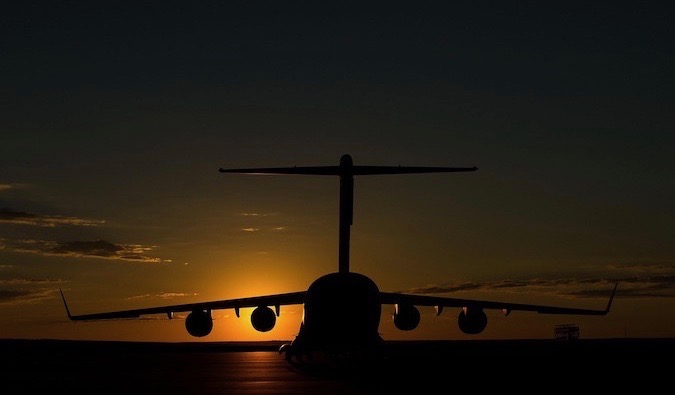
I’ve been traveling for close to twenty years. In that time, the airline industry has changed a lot. The use of points and miles has become widespread, round-the-world tickets have gone the way of the dodo, airlines have consolidated, and there has been an explosion of budget airlines. Over the last few years, the cost of airline tickets has steadily risen. They get more and more expensive while their prices often seem illogical. Since ticket pricing is an arcane and misunderstood subject, I want to take some time to explain why your airplane ticket costs what it does. A Look at the Airline Industry Ticket prices have increased over the decade for a number of reasons. For starters, the industry has consolidated a lot over the last few decades. Thanks to bankruptcies and mergers, there are now only three major alliance airlines (American, Delta, and United) in the United States. And, with the recent bankruptcy of Spirit and the merger of Alaska and Hawaiian, there’s even less competition outside the Big 3. In Canada, there are only two major airlines – WestJet and Air Canada. In Europe, Air France–KLM, British Airways IAG, and Lufthansa control the bulk of the market. (Though, thankfully, in Europe, there are lots of budget airlines to choose from.) As airlines have partnered up, merged, or gone bankrupt, there is little incentive to provide low fares to win your business. After all, when only one or two airlines are flying a route, airlines know you don’t have much choice. Less competition means higher prices. Secondly, the price of airline fuel has increased tremendously. Back in 2017, jet fuel cost $1.37 per gallon. In 2024, it is $6.49 per gallon! Airlines have simply passed that fivefold increase on to the consumer. Thirdly, airline taxes and security fees have increased a lot, adding to the cost of your ticket. Ever fly into London? Half the ticket price is made up of fees and taxes! Finally, demand fell following the 2008 recession, and to compensate, airlines reduced both the number of routes they offered and the frequency of their flights. Fuller planes mean more passenger revenue and fewer costs for the airline. That trend greatly accelerated during COVID. When COVID shut down global travel, airlines mothballed a lot of their older planes and fired a lot of their staff. When travel restrictions were lifted and more people started flying again, they didn’t have enough planes or staff to return to a pre-COVID schedule. This decrease in the supply of flights, coupled with the surge in demand for trave,l meant that airlines had little incentive to lower prices. According to Rick Seaney of Farecompare.com, “Before 2008, things were in favor of the passengers. After the 2009 crisis, the scale of justice tipped towards the airlines.” Taken together, a consolidated airline industry that is facing more costs is simply less likely to generally offer lower fares. How Airlines Determine Pricing Prices go up and down for many reasons. There are four major factors that drive prices are competition, supply, demand, and oil prices. Together, those four things affect something called “the load factor.” Airlines want to fill their planes and maximize profits, and they do this by calculating a plane’s load factor. Essentially, this is the percentage of seats sold on a flight. They want this number to be as high as possible. To get the highest possible load factor, airlines will constantly change prices based on the four categories above in order to get people to buy tickets. Airlines use dynamic pricing models and artificial intelligence (AI) to figure out the maximum value they can get for each seat. Have you ever wondered why airlines seem to callously raise their prices after a big event spikes demand? They aren’t. The AI is. All it sees is sky-high demand and adjusts accordingly to its programming. More demand = higher prices. These advanced computer systems constantly compare booking trends to past sales history, major events, concerts, sporting events, weather, and competitor behavior. They can look at consumer searching and booking behavior and process lots and lots of data and change prices on the fly (no pun intended) in hopes of getting the best price possible. All of this is why one day a flight may cost $100, then $400 the next, and then back to $100 the day after that. As people buy seats on a flight, airlines raise prices, and when demand falls (at a certain price point), they lower prices until fewer and fewer seats are available, then they will raise prices again. It’s a delicate balance designed to ensure maximum revenue. It’s why prices are cheapest for 5 AM flights, more expensive over the holidays, and through the roof during peak season or if there’s a major sports event in town. After all, you can’t add more seats to a plane, so all they can do to raise revenue is charge higher fares! It’s also why prices might change in seconds. It’s not because they are tracking your cookies, it’s because the AI is responding to real-time changes in seats. Think about it. How many booking companies are out there? Lots! All of them are reserving seats. Millions of people fly each day and, with limited routes, it’s easier to fill planes, so the AI doesn’t need to discount fares as much as it had to in the past. On a US domestic flight, there might be 10–15 different price points. If the load factor is low and demand is low, an airline will increase the availability of cheap fares. If the load factor is high and demand is high, the airline will raise prices. As Rick said, the airline is advantaged now. But it’s not impossible to find a cheap ticket. There are many, many ways to find cheap airfare. To avoid being the person who paid the most for their ticket, the main thing to do is to be flexible. Airlines are constantly changing prices to
Why Your Airplane Ticket is So Expensive Read More »
Leaked documents reveal how much OpenAI paid Microsoft under a revenue-share agreement. They also indicate inference costs.
Leaked documents shed light into how much OpenAI pays Microsoft Read More »
VC Andy Konwinski argues that the U.S. is losing its AI research dominance to China.
Databricks co-founder argues US must go open source to beat China in AI Read More »
The new data, released Friday, finally addresses some of the biggest criticisms of the paltry “safety reports” Tesla’s released for years.
Tesla releases detailed safety report after Waymo co-CEO called for more data Read More »