Tech

LFW AW26: Richard Quinn embraces the hourglass silhouette in glamour-filled show

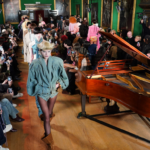
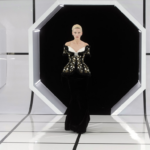
Richard Quinn delivered a characteristically dramatic showcase for autumn/winter 2026 at Sinfonia Smith Square Hall in London, cementing his reputation as one of London Fashion Week’s most glamorous designers. The south London-born creative, who honed his craft at Christian Dior and on Savile Row before launching his label in 2017, has become synonymous with bold florals and sculptural, statement eveningwear. Presented against a stark black-and-white geometric runway, this autumn/winter 2026 collection unfolded with Quinn’s signature florals alongside more sculpted silhouettes and highly engineered styling. The sculpted hourglass was a standout trend at Richard Quinn (Jeff Moore/PA) Backstage, models stood enveloped in sweeping, structured gowns. The grandeur of the concert hall amplified the collection’s theatrical styling, underscoring Quinn’s affinity for dramatic, old-school couture. Corsetry and hour-glass peplums emerged as the central trend. Strapless bodices were tightly structured and often accented with oversized crystal brooches at the neckline or waist – a detail repeated throughout the show and on other runways this season. Backstage it was clear that sculpted waists were big (Jeff Moore/PA) One ivory lace corset dress was capped with a delicate black lace bolero and cinched at both bust and hip with jewel embellishments before exploding into a tiered black tulle fishtail. The contrast between rigid bodice and frothy volume reinforced the return of hyper-defined hourglass dressing. Overskirts were another major statement. A polka-dot strapless column dress was partially concealed beneath a sweeping black satin overskirt that opened at the front, revealing the fitted silhouette underneath. The layered look created movement without sacrificing structure suggesting that detachable or sculptural overskirts could become a key red-carpet styling device for AW26. Conversely to other runways this season, mermaid hems dominated. Mermaid silhouettes were also key for Quinn (Jeff Moore/PA) Nearly every gown flared dramatically below the knee, creating elongated, statuesque proportions. After several seasons of looser tailoring across London, Quinn’s insistence on body-conscious shaping feels like a deliberate reaction. Florals, Quinn’s signature, appeared in two directions. Dense, dark blooms were scattered across black gowns, winterised and controlled. In contrast, pale lemon and white floral accents of embellishment also introduced soft romanticism. Quinn also introduced embellished florals (Jeff Moore/PA) Feathers also signalled a continued trend that has been spotted on almost every London Fashion Week runway. A sheer, high-neck illusion gown embroidered with delicate leaf motifs dissolved into dramatic black feathered cuffs and a matching feathered hemline. The payoff was both ethereal and theatrical as texture was concentrated at the extremities rather than overwhelming the silhouette. Quinn’s interpretation of the feather trend felt particularly couture-driven. Velvet remained a dominant finish. Black velvet gloves were ubiquitous, paired with velvet bodices and floor-length skirts that absorbed the stark light of the white runway. The matte-versus-shine contrast amplified the drama of the look. Velvet was used liberally (Jeff Moore/PA) Colour, though mainly monochromatic, had moments of vibrant impact. Powder pink corsetry, acid yellow gowns and mint satin skirts punctuated the largely black and white palette. These confectionary tones; particularly offset by black; suggest that icy pastels will continue into autumn/winter rather than being reserved for spring. Hot pink has also been a trend on the runways (Jeff Moore/PA) The repetition of crystal brooches – fastening halters, cinching waists and anchoring bows – introduced an accessory trend that has already prevailed in the past two months. Jewellery wasn’t layered; it was integrated into the garment construction itself, reinforcing this precise and more couture sensibility. Since establishing his label in 2017, and following his presentation of the inaugural Queen Elizabeth II Award for British Design in 2018, Quinn has consistently championed structured eveningwear. Designer Richard Quinn taking a bow after his AW26 show (Jeff Moore/PA) Sculpted corsets, dramatic fishtails, statement overskirts and winter florals signalled a return to structured femininity, echoing the 1940s and Fifties silhouettes of Dior’s ‘New Look’. Rather than merely nodding to that era, Quinn amplified it with fierce intensity.

LFW AW26: Richard Quinn embraces the hourglass silhouette in glamour-filled show Read More »

JD Sports launches £200m share buyback programme

Following on from last year’s £100 million share buyback programme, JD Sports Fashion has announced it intends to return a further £200 million of capital to shareholders through share buybacks in its full financial year of 2026/27. In line with JD’s capital allocation priorities and its commitment to continue delivering significant cash returns to shareholders, the programme will commence immediately and initially involve the purchase of ordinary shares of £0.0005 each in the company. The company has entered an “irrevocable agreement” with Merrill Lynch International (BofA Securities) to undertake the programme on its behalf. The maximum number of shares that may be acquired under the programme, as authorised by shareholders at the company’s 2025 annual general meeting on 2 July 2025, is 515,475,677. Last month, JD Sports reported “resilient” trading over the peak Christmas period, delivering Q4 sales growth of 1.4% and said it expects full-year profit to be “in line with market expectations”. Covering the nine weeks to 3 January 2026, the retailer said like-for-like sales declined 1.8%, broadly unchanged from the third quarter. The group’s performance was underpinned by a return to growth in North America, its largest market, where like-for-like sales rose 1.5%, improving markedly on Q3. That strength was partially offset by weaker trends in Europe and the UK, where consumer demand softened in early December.

JD Sports launches £200m share buyback programme Read More »

LFW AW26: Chet Lo transforms fashion week for blind and low-vision guests

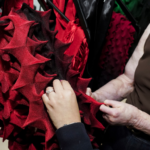
During fashion month, collections are typically experienced through observing runways – the sweep of a silhouette, the glint of embellishment under lights, the choreography of models moving in sync with a soundtrack. But at Chet Lo’s latest show, the experience began long before the first look stepped onto the runway – and it began with touch. Before the runway show, blind and low-vision guests were invited to take part in a “touch tour”, part of the Hair & Care programme founded in 2019 by hairstylist Anna Cofone. Each guest was able to feel a piece from the collection and talked through it by Lo himself. The fabrics ranged from black and emerald green spiked knits to ostentatious, feather-fluted materials. Founder Anna Cofone at the touch tour (Madoka Takei/PA) For Cofone, who has worked with artists including Dua Lipa and Lana Del Rey and grew up with a blind father, expanding into fashion accessibility felt inevitable. “We’ve been seeing first-hand the impact that self care, hair, and accessible hair and beauty has on blind people’s confidence, on their sense of empowerment, identity,” she says, “and so it just felt like an organic step to then also bring help to bringing fashion to the forefront, making it accessible for blind and low-vision people.” The initiative first partnered with Lo in 2024 and is now three seasons into its collaboration. This time, it was supported by global brands including Philips Sound for the blind attendees’ headphones and haircare brand Authentic Beauty Concept. For Cofone, this is evidence that the industry is slowly shifting. “Companies are realising that they need to be inclusive and they need to be accessible for blind and low-vision people,” she says. The concept behind the touch tour is simple: allow guests to experience garments through texture and storytelling before they are presented visually on the runway. “So the idea of the touch tour is to give guests an opportunity to meet the designer in person, but most importantly, feel the key pieces in the collection up close,” Cofone explains. “It helps to paint a much stronger visual interpretation for them as they’re listening to the audio descriptions whilst the models are on the catwalk.” A guest feeling the tactile umbrellas from Chet Lo’s autumn/winter 2026 collection (Madoka Takei/PA) Lo’s work – known for its sculptural silhouettes and three-dimensional spiked knits – lends itself naturally to tactile exploration. Audio descriptions were prepared more than a week in advance, with the running order confirmed the night before the show to ensure seamless alignment. For visually impaired attendee and activist Catrin Pugh, the impact is profound. “Fashion for me has always been something that’s felt a bit out of reach,” she says. “As a visually impaired person, I have no central vision. I can’t see detail. So actually, fashion is really hard to be engaged in, because the detail is everything in fashion.” Guests feeling a feathered, spiky dress by Chet Lo (Madoka Takei/PA) The touch tour changed that. “Coming to the touch tour meant I had an opportunity to see all these tiny elements that these designers spend hours, weeks, days, months, years, deciding on to become their own personal brand. “I got an opportunity to see it, to feel it, and it just made such a difference that when I then saw those looks coming down a runway, I felt I still got to be part of it. And that’s not something I’ve ever felt before in fashion.” Texture, she says, is central to Lo’s appeal. “So much of his brand and who he is is all about textures. It’s about creating shapes, about creating these unusual silhouettes and using shapes coming off the garments to actually express that,” she says. Catrin Pugh (left) at the touch tour (Madoka Takei/PA) “Chet’s work is so tactile, so for a visually impaired person, it’s like the perfect collaboration.” One piece that stood out in particular was a pair of trousers. “[It] sounds super simple, but when he went into the delicacies and the intricacies of it, they are silk trousers with a felt embed at the top. “That juxtaposition between the more coarse felt and the silk when it’s a tactile thing, is so important, because it does tell a story in one piece of clothing,” she explains. Chet Lo presenting one of his pieces to blind and low-vision guests (Madoka Takei/PA) While conversations around inclusive casting have gained momentum in recent years, accessibility for audiences has often lagged behind. Initiatives like Hair & Care suggest that meaningful inclusion goes beyond who is seen on the runway. “Anyone that has a disability, I think always feels excluded from all areas of life, but fashion in particular can be so difficult to feel included in when you are visually impaired, because it’s so much about how it looks – that is what fashion is,” Pugh says. For Cofone, the argument is not only social but commercial for brands. “We’re seeing the impact that it’s having on people, but also on designers,” she says. “The purple pound is so strong and so there, as well as making people feel included and having accessible websites, accessible runway shows, packaging, it’s also helping to build stronger revenue streams.”   View this post on Instagram   A post shared by @makingfashionaccessible With around 25% of the UK population reported having a disability in 2023/24, accessibility is increasingly difficult for brands to ignore. As the lights dimmed and the first look stepped onto the runway, guests who had already felt the fabrics and heard the story behind the collection experienced the show differently – not as observers on the margins, but as participants. For some, that shift is everything. “The touch tour means that I do get excited about it,” Pugh says, “I get to feel like I’m part of it.”

LFW AW26: Chet Lo transforms fashion week for blind and low-vision guests Read More »

LFW AW26: Masha Popova bares all with provocative ‘Intimate Hours’ show

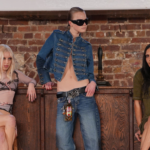
Masha Popova bared all for autumn/winter 2026, sending out backless silhouettes, ultra-low rises and abbreviated hot pants beneath the stately ceilings of Charterhouse in one of London Fashion Week’s most provocative shows. Titled “Intimate Hours”, the collection explored the bedroom as a psychological space – a place where desire, boredom and memory quietly accumulate. Masha Popova reworked the idea of nightwear as outerwear (Ian West/PA) That introspection played out in garments that felt simultaneously private and performative, with lingerie accents, sleepwear details and distressed denim colliding against the historic grandeur of the venue’s green-panelled walls and oil portraits. The Ukrainian-born London-based designer, known for her high-fashion denim, presented a smorgasbord of colours, cuts and textures, one of the first being a sheer-legged look in a fluid green-and-blue printed set: a halter top knotted into an exaggerated bow at the neck and paired with ruffled micro shorts worn over fine black tights. Slouched boots pooled around the ankles, fortifying the undone atmosphere. A green and blue two-piece set on the Masha Popova runway (Ian West/PA) Hot pants were a recurring motif – a trend that seems to be cropping up across London Fashion Week runways. A blush-pink knit cardigan and matching shorts, belted low on the hips, were styled with voluminous, flame-bright hair feeling deliberately unruly. Hot pants and hot pink were trends on the runway (Ian West/PA) Denim – Popova’s signature – was pushed into more tailored territory. One look featured a halter-style denim top tied into a large bow across the chest, cut away at the midriff and paired with low-slung jeans secured by crossed leather belts that wrapped diagonally around the hips. Leaf motifs were embedded into the denim surface, hinting at the designer’s ongoing experimentation with treated fabrics. Denim was reworked into a variety of silhouettes (Ian West/PA) In another, a corset-like denim bodice with off-the-shoulder sleeves and visible red topstitching was worn with dramatically flared jeans that pooled at the floor. The silhouette combined architectural details with a grungy sensuality, reflecting Popova’s background in architecture and her ability to manipulate rigid fabrics into fluid forms. Denim was fashioned into eveningwear (Ian West/PA) Sleepwear references were literal at times. A full-length hot-pink robe coat, plush and enveloping, was styled for the runway rather than the bedroom, its exaggerated collar and belted waist elevating the domestic into statement outerwear. The gown also featured an open back exposing the model’s underwear. A hot pink bathrobe-dress was one of the closing looks (Ian West/PA) Elsewhere, jersey was treated into near paper-thin layers, and knitwear – a newer addition to Popova’s vocabulary – appeared embossed and tactile. Popova, a Central Saint Martins BA and MA graduate who previously interned at Maison Margiela and Celine, has built her brand as a melting pot of late 20th century high fashion and 1990s-2000s rawness. Seen on Dua Lipa, Billie Eilish and Bella Hadid, her work consistently combines elegance and irreverence.   View this post on Instagram   A post shared by MASHA POPOVA (@mashapopovap) At Charterhouse, that tension felt particularly potent; the grandeur of the setting underscored the collection’s themes of privacy and exposure; bottoms revealed beneath structured dresses, sheer tights layered under abbreviated silhouettes and denim reworked into eveningwear. It seems for this collection, Popova’s woman is neither fully dressed nor fully undone. Instead, she occupies the liminal state between self-awareness and defiant display.

LFW AW26: Masha Popova bares all with provocative ‘Intimate Hours’ show Read More »

LFW AW25: Sinead Gorey brings Irish pub culture to catwalk

An Irish pub – complete with pool tables, low lighting and bottles raised mid-walk – was not the most obvious setting for a London Fashion Week runway. But for autumn/winter 2026, Sinead Gorey made it the centrepiece. Staged in The Crypt at St James’s Church in Clerkenwell, the underground venue was bathed in a dim red light, evoking the atmosphere of a Nineties Irish local. Two pool tables lined the runway and a bar installation anchored the end of the catwalk, as a mash-up of Pixies, Joy Division and Pulp blasted through the space. Models occasionally paused to chalk a cue or take a swig from a bottle before continuing down the runway, blurring the line between performance and presentation. Models carried half-full beer bottles down the runway (Yui Mok/PA) For Gorey, whose work often draws on London nightlife subcultures, the pub represented both the beginning and end of a night out: “The pub,” she says, “honestly, nothing beats being wedged round a sticky table with your girls on a Friday, pint in hand, pretending you’re good at pool. Maybe it’s the half Irish thing, maybe it’s just in my DNA […] some people meditate, I go to the boozer.” On the runway, exaggerated hourglass silhouettes dominated in Gorey’s signature corsets. Shoulders were broadened, waists sharply cinched and hips sculpted, creating a severe silhouette that seems to be dominating the runways. Military details and corsetry dominated the collection (Yui Mok/PA) Military jackets, braiding and structured tailoring reinforced the power-dressing. Corsetry and bustled silhouettes were reworked in bonded Lycra, technical jersey and metallic finishes, fusing heritage femininity with contemporary fabrication. Exposed zips, studs and hardware buckles cut through more romantic elements, while fishnet panels and second-skin layers added a utilitarian edge. Fringe and furry trims – recurring trends across the London schedule – injected texture and movement under the low lighting. Ostentatious trims and metallics have cropped up on the London Fashion Week runways (Yui Mok/PA) The palette echoed the setting: stout blacks, bitter browns and oxblood reds were punctuated by pool-table greens and flashes of chrome. Glossy finishes suggested lacquered tabletops; heavy shearling and structured outerwear nodded to the reality of cold pavements outside the pub doors. A visible collaboration with Desperados ran throughout the show, with bottle caps repurposed into jewellery and hardware details. One model wore a belt designed to hold bottles, while another used a buckle-turned-bottle opener on the runway. At times the branding felt overt, but it aligned with Gorey’s unapologetically playful, irreverent aesthetic. A model wearing a beer bottle top-studded bag at the Sinead Gorey show (Yui Mok/PA) Footwear tapped into shared British and Irish nostalgia, with the classic Kickers Kick-Hi boots grounding many of the looks. Founded in 2019 with support from the British Fashion Council, Gorey’s label has built a recognisable identity around contemporary technical partywear, attracting fans including Miley Cyrus and Cardi B. This season, however, felt like a refinement of that formula. Many of the models stepped out in the classic Kickers Kick-Hi boot (Yui Mok/PA) The sex appeal remained but the tailoring carried more authority. The exaggerated silhouettes suggested confidence rather than chaos, hinting at a maturing vision. By reframing the Irish pub as a space of mythology rather than cliché, Gorey delivered a show that felt culturally specific yet broadly relatable. Beneath the theatrics of pool cues and pints was a considered exploration of where tradition, rebellion and femininity meet. If previous collections captured the chaos of the after-party, autumn/winter 2026 suggested Gorey understands that the stories shaping a night out often begin around a sticky table, under low lights, long before the club doors open.

LFW AW25: Sinead Gorey brings Irish pub culture to catwalk Read More »

LFW AW26: Dreaming Eli pushes corsetry to the extreme in exploration of female friendship

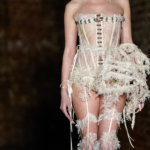
Dreaming Eli delivered one of the most striking and theatrical shows of the London Fashion Week schedule so far, presenting a collection of tight corsets, sheer tulle, lace and a stark palette of nudes and blacks. Founded in 2021 by Sicilian designer Elisa Trombatore, the London-based womenswear label has built its identity around the idea of clothing as both a political and personal statement. Deconstructed lace is a signature of Dreaming Eli (Ian West/PA) A graduate of Central Saint Martins’ MA Fashion programme, Trombatore centres Dreaming Eli on themes of female empowerment, sensuality and resilience, often drawing on her Sicilian heritage and its inherent dualities – softness and defiance, tradition and rebellion. That tension was palpable on the candlelit runway of her autumn/winter 2026 collection, The Court of the Maddest, Merriest Things Alive, at the Beaconsfield Gallery in London. The Dreaming Eli bride carrying an apple above her head, representing temptation (Ian West/PA) Raw-edged lace appeared coiled like twine around boned corsets, most notably in a sheer ivory strapless look where delicate black hook fastenings ran vertically down the torso. The corsetry was left deliberately exposed, with lace panels fraying into asymmetric garter details that trailed down the legs, creating a sense of controlled unravelling. Elsewhere, a sculptural cream gown paired a tightly ruched corset bodice with an exaggerated draped skirt, the volume gathered low at the hips. The model’s porcelain, doll-like make-up and towering white platform heels heightened the theatricality, evoking John Galliano’s Maison Margiela Artisanal 2024 couture show. One model carried an apple aloft – a subtle nod to myth and temptation – highlighting the collection’s tones of romantic folklore.   View this post on Instagram   A post shared by Maison Margiela (@maisonmargiela) A sheer blush gown offered a softer counterpoint. A structured corset, traced with black fastenings, gave way to layers of flowing tulle and lace sleeves that floated as the model walked, while a delicate butterfly rested in her hair. The look balanced transparency and structure, strength and fragility. In another standout moment, a model’s face was partially veiled in lace beneath a crown of thorn-like branches, the intricate headpiece lending a devotional, almost martyr-like quality. The garment itself was composed of cascading ruffles and exposed lacing running down the back, further emphasising Trombatore’s fascination with vulnerability made visible. The show closed with Trombatore herself joining a model on the runway, both dressed in corseted mini silhouettes – one in black lace, the other in ivory – underscoring the collection’s core message of solidarity and female strength. Designer Elisa Trombatore (right) and a model at the finale of the show (Ian West/PA) Models throughout emerged in lingerie-inflected silhouettes defined by structured corsets and sheer layering. Towering heels elongated the body while the corsets sculpted and at times distorted it, intensifying the collection’s architectural quality. Together, the looks displayed a sense of strength and delicate sensuality in equal measure. Romantic draping softened the severity. Silk and chiffon cascaded from tightly laced bodices, while Chantilly lace and tulle were layered to create depth and movement. In several looks, the corset acted as both centrepiece and anchor – pulling the waist inward before releasing into fluid skirts or trailing panels of sheer fabric. Corsets acted as a centrepiece for many of the looks (Ian West/PA) The silhouettes were unmistakably feminine but not passive. Bustled shapes and nipped waists have dominated the runway this season, while Trombatore’s decision to remain within a narrow palette amplified the construction, allowing precise tailoring to take precedence. While the looks were exaggerated, the show avoided tipping into excess, instead feeling intimate and self-aware, as though exploring the internal architecture of femininity rather than simply performing it. Dreaming Eli’s pieces are made entirely in London, with many incorporating lace-up adjustability designed to accommodate different body shapes and extend a garment’s lifespan. That emphasis on longevity and thoughtful construction aligns with Trombatore’s broader philosophy of clothing as an evolving companion rather than disposable spectacle. The collection received a standing ovation from many in the audience (Ian West/PA) Since launching at London Fashion Week’s Discovery Lab in 2021, supported by the Isabella Blow Foundation, the brand has steadily built international recognition. It now shows biannually on schedule and has dressed high-profile figures including Kylie Jenner, Lizzo and Julia Fox. Yet despite its growing profile, the label retains an exclusive quality. The sensuality remains central in this collection – sheer panels, exposed structure and sculpted waists are hallmarks of the brand – but there was a new assurance in the editing. The reliance on nude and black, the repetition of corseted forms and the commanding presence of towering heels reinforced a cohesive narrative.

LFW AW26: Dreaming Eli pushes corsetry to the extreme in exploration of female friendship Read More »

Review Your Cart
0
Add Coupon Code
Subtotal