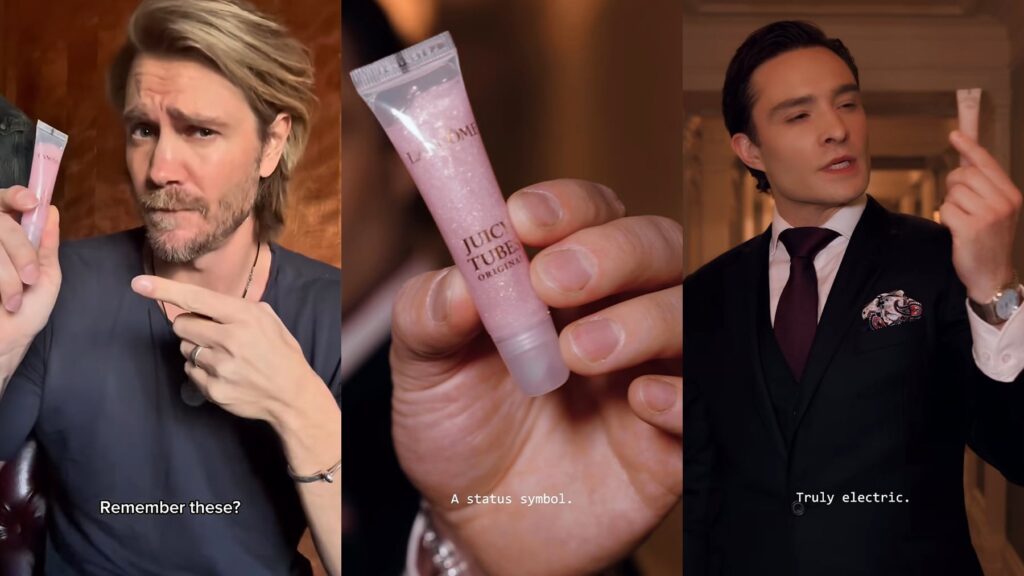
Want to Sell Lip Gloss? Get Boys to Do It
Lancôme’s Juicy Tubes campaign meant to coast on nostalgia. It found a new campaign niche instead.
Want to Sell Lip Gloss? Get Boys to Do It Read More »

Lancôme’s Juicy Tubes campaign meant to coast on nostalgia. It found a new campaign niche instead.
Want to Sell Lip Gloss? Get Boys to Do It Read More »

The European Union is considering a handling fee for low-value e-commerce packages, primarily from platforms like Shein and Temu, to address a surge in volume and ensure compliance with EU regulations.
EU Plans €2 Fee for Low-Value Parcels in Setback for Shein and Temu Read More »
Despite outperforming competitors recently, Ralph Lauren anticipates slower revenue growth in the latter half of the fiscal year due to weakening US consumer spending.
Ralph Lauren Expects Robust Growth to Slow Amid Weakness in US Read More »
The elusive hacking group Careto was never publicly linked to a specific government, but TechCrunch has learned researchers concluded privately that the Spanish government was behind the group.
Mysterious hacking group Careto was run by the Spanish government, sources say Read More »
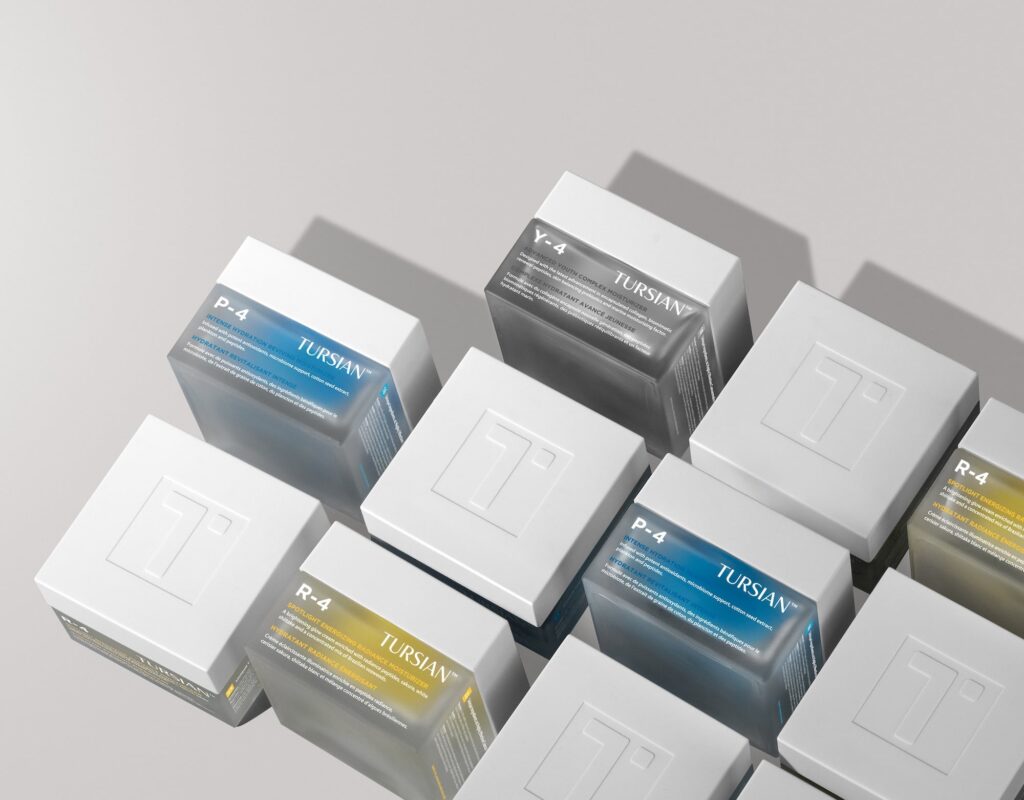
Years after Brandon Truaxe, the trailblazing beauty founder, passed away, his partner Riyadh Swedaan has launched a skincare collection in his name.
How Tursian Builds Off Deciem Founder’s Legacy Read More »
The once-promising Chinese travel retail market is showing little signs of recovery, causing global beauty giants to reevaluate their strategies and reduce promotions.
Estée Lauder Companies, L’Oréal Suffer as China Duty-Free Spend Continues to Fall Read More »

London’s reputation as a potent international retailing destination was underlined last week as almost 1,000 senior industry figures attended the 18th edition of World Retail Congress. Back in its home base for the first time since 2012, the two-day conference covered most significant sectors, from luxury fashion to discount supermarkets. Delegates at the London Hilton on Park Lane were presented with a slickly-organised and packed programme of keynote addresses, discussion panels, fireside chats and break-out mini-sessions. Although aimed at “big” players from global retail, there was plenty of information on offer that was relevant to indie retailers and smaller fashion brands. In the opening keynote address last Tuesday (May 13), Ken Murphy, CEO of the UK’s biggest retailer Tesco, shared some pertinent insights that should resonate with any capable independent. The supermarket’s success depends on the customers’ trust and on being a part of its communities, the quietly-spoken Irishman asserted. “Doing the right thing always made good business sense” was his message. Repeating the oft-heard line that “rarely have things been as challenging as they are today,” Murphy insisted: “Trust doesn’t follow success, it drives it”. For shoppers to engage with a retailer, they have to believe the business does good. Tesco’s Clubcard will celebrate 30 years this year and Murphy said the company is currently trialling personalised Clubcard prices: “To do the right thing you have to understand (the customers, who) want to know they are buying from companies that align with their values.” Surely this personal knowledge of customers is a central plank of the success of any indie store, as is its role as an important part of a local community – another point that Murphy said Tesco achieved. One of the more interesting aspects of the WRC’s approach is to have industry leaders interviewing their peers. JD Sports CEO Régis Schultz did a good job of questioning Britt Olsen, COO of fast-growing Swiss sportswear brand On (main image), which is now 15 years old and is expecting global sales this year equivalent to £2.6 billion. Even with the advantage of Roger Federer being a founding shareholder, the company has done remarkably well in a market sector dominated by huge global brands. “Seeing a brand grow that was dominated by big players in the market is never down to just one thing,” said Olsen. “Coming into an industry of giants, it was an advantage being the underdog. Our success is also down to naivety and blind optimism. Culturally we have a strong focus on innovation too.” She added that in the American market especially, the Swiss flag on the shoes was seen as indicating quality, reliability and “premiumness”. Olsen also stressed On was doing well with its sportswear clothing, which prompted Schultz – whose JD is a stockist of the brand – to quip: “Yes but it’s quite expensive!” An On women’s running jacket on the JD website is £180, a men’s T-shirt is £60. There was more humour when the subject of consumers’ attitude to sustainability was discussed. In a survey conducted by On in New York City, when consumers were asked what sustainability meant for them, a common answer was: “Keeping my sneakers whiter for longer”. “I’m often asked if our customers care (about sustainability) and the truth is they don’t. But we do!” Olsen added. “We want to be sustainable because it’s a key value. We care and we make sure we invest in sustainability – which is very Swiss. How we talk about sustainability is a constant point of discussion for us.” Olsen added that maintaining a balance between DTC and having wholesale partners was key to its future growth, which may bring a wry smile from some early-adopting UK indies that On axed in recent years. Helena Helmersson, former H&M CEO Sustainability in fashion was also the topic of a thought-provoking presentation by Helena Helmersson, who exited H&M a year ago after 20-plus years at the Swedish company, including her final four as CEO. She highlighted the ever-present tension between sustainability goals and the business-as-usual demands within a company, across consumers and throughout the entire supply chain. In her analysis she said we have moved from a phase around 2020 where the sustainability space was filled with big promises and green visions for the future, and now, with unpredictable events happening continuously, in 2025 we’re in the Valley of Disillusionment. The next phase, running up to 2030, will be about moving up the Slope of Enlightenment, creating real value, moving away from big headlines to actually making impact. But it’s up to industry leaders to ensure sustainability is part of the core to strengthen our businesses. In Helmersson’s view, top management’s job is to design a system to help the organisation succeed with sustainability and profitability. Make it simple for the many and complex for the few is her mantra. To influence customers’ behaviours we need to understand their needs and create solutions to meet them, she maintained. We need to make sure that sustainability is good for people’s wallets, that it makes life easier, and creates true value. She highlighted H&M’s partnership with Sellpy, a Swedish platform for selling secondhand clothes online. On the huge task of shifting industry attitudes, she said we need to move away from checking boxes and scratching the surface. We need build deep and find the right partnerships to actually solve the issues and, step by step, change the system, she said (without going in to how this could be achieved) Jamie Salter (l) of Authentic Brands Group While sustainability was high on some people’s agenda, selling lots more stuff more often was a predictable preoccupation of many at WRC. Prime among these is the US-based Authentic Brands Group (ABG), which has partnered with American store group Saks Global to launch a platform called Authentic Luxury Group (ALG). The intention is to create what has been described as “a $9 billion luxury ecosystem” over the next few years. Opening the second day of WRC Jamie
World Retail Congress: Retail’s not dead, but mediocre retail is dead Read More »
Community Clothing, the British brand and social enterprise founded by designer and ‘The Great British Sewing Bee’ judge, Patrick Grant, has launched a new crowdfunding campaign through Crowdcube with the aim to raise “a minimum of £500,000”. Community Clothing started with a crowdfunder via Kickstarter back in 2016, and also crowdfunded its underwear launch in 2022. The latest campaign is set to run for an estimated two to three weeks, though Grant says it really depends on the speed at which people subscribe. Potential investors can head to Community Clothing’s Crowdcube page and give an indication as to how much they might invest, though there is no commitment at this stage. It could be just the minimum amount of just over £10, or it could be £1,000 or more. Once registered, Community Clothing will send an email to say when early access will be open with the required link. Once live, budding investors will have 24 hours to subscribe for shares before they go on sale to the general public. Grant told TheIndustry.fashion: “If everyone that’s signed up for early access were to buy the shares they’ve suggested they might, then the campaign could be over very rapidly. Early signs are encouraging. “We’ve always been about creating a community, and doing an equity raise this way feels like a great way to strengthen our ties with the brilliant community of makers and customers that we’ve built over our first nine years.” Commenting on what the funds will be used for, Grant said: “Primarily we just want more people to hear our story, our big ambition is to get everyone wearing well made locally made clothes – so we’ll use a chunk of this money to help spread the word. “If we go past our minimum target, it will help us add more stock of some of our fastest selling pieces, as there are some things that we really struggle to keep in stock at the moment.” In terms of the risks and likelihood of success for investors, Grant added: “It’s far from guaranteed, but we’ve made a brilliant start over the years we’ve been going, and we’ve built a great customer base (over 100,000 customers). “We’ve a got a solid five star rating on Trustpilot and we’ve been growing really nicely these past few years. We also think we have a model that’s fit for the future, so we’re very optimistic about our chances of success.”
Community Clothing launches crowdfunding campaign to raise £500k Read More »
US sportswear giant Nike is set to raise its prices by as much as 10% from 1 June, but has said it is making changes as part of “seasonal planning” instead of directly pinning blame on the pending tariffs brought in by US President Donald Trump. That’s according to the BBC, which says that most Nike shoes that cost more than $100 (£74.50) will see a price rise of as much as $10 (£7.50). That would mean that Nike’s popular Air Force 1, which currently retails at £110 at JD Sports and Footlocker in the UK, could soon be costing over £120. Price of clothing and equipment will also be raised by between $2 (£1.50) and $10 (£7.50). However, trainers that cost less than $100 will not be included in the price rises and children’s products will also not be included in the hikes. Yesterday, JD Sports said that higher prices due to the tariffs in the US – where the UK sportswear retailer has been gaining ground with flagship stores in major cities such as New York and Chicago – could hit customer demand. Nike has also said it will sell products directly to Amazon in the US for the first time since 2019. Almost all Nike trainers are made in Asia, and goods from Vietnam, Indonesia and China are facing some of the heaviest US import taxes, in the region of 32% to 54%.
Nike to hike prices by as much as 10% amid Trump’s tariffs Read More »
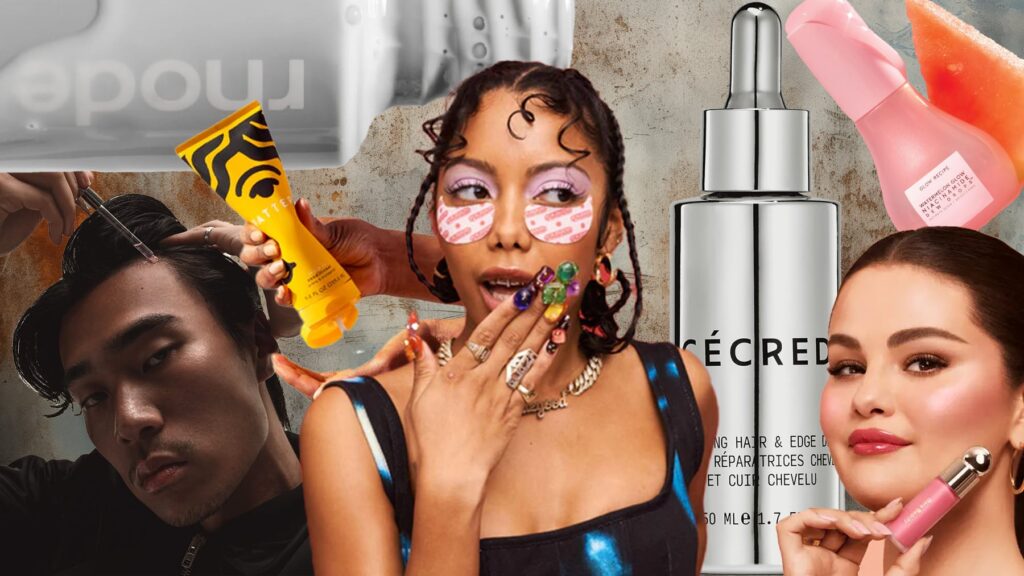
Breakout products like Cécred’s Restoring Hair & Edge Drops or Topicals’ Faded Serum aren’t just sales drivers — they shape a brand’s identity, fuel customer loyalty and lay the foundation for long-term growth. But finding one takes more than luck.
How an Indie Beauty Brand Finds Its Hero Read More »