Tech

First M&S, now Dior: Cyber attacks put fashion on high alert

Dior has confirmed a data breach affecting Chinese customer data, underscoring rising cybersecurity risks in fashion. As luxury and high street brands alike face growing threats, data protection is becoming a critical priority in the industry’s digital evolution. The breach, which Dior reportedly discovered on 7 May, involved unauthorised access to a customer database containing non-financial personal data. This included names, gender, phone numbers and other voluntarily shared information. Crucially, no banking or payment information was compromised, according to statements shared by the brand. Dior issued a statement that read: “We are in the process of informing customers where necessary. The confidentiality and security of our customer data is an absolute priority for the House of Dior. We deeply regret any concern or inconvenience this matter may cause our customers.” Customers in mainland China were notified of the breach via text message earlier this week, with Dior assuring them that it had moved swiftly to contain the incident. The brand is now working with cybersecurity experts and has reported the issue to relevant regulators as part of its ongoing investigation. The breach comes at a time when parent company LVMH is navigating a challenging environment in the Chinese luxury market. Last month, the owner of Louis Vuitton, Dior and Loewe to name a few, reported a 3% year-on-year decline in Q1 to €20.3 billion (£17.4 billion), with sales in China (excluding Japan) falling by 11%. The timing of the breach could add further pressure to Dior and other luxury houses heavily reliant on China for growth. British retailer Marks & Spencer has also disclosed a cyber attack affecting its operations. While the retailer’s physical stores remain open, its online business has been disrupted for over three weeks, reportedly due to a ransomware attack. In its latest update earlier this week, the retailer urged customers to “stay vigilant” for scams and fraud after it confirmed some personal data had been stolen in a cyber attack. The British department store said on Tuesday that data that could have been accessed includes names, email addresses, postal addresses and dates of birth, but stressed the data does not include payment or card details, or account passwords and is not believed to have been shared online. Matt Hull, Head of Threat Intelligence at cyber security firm NCC Group, said: “Despite the absence of financial data or passwords, threat actors could potentially use the stolen information to launch targeted social engineering attacks. “Stay vigilant for phishing messages pretending to be from M&S or other companies you’ve dealt with. These attackers might use the leaked M&S information to craft very convincing scams.” Following the attack on M&S, Harrods was also targeted by cyber hackers. A spokesperson for Harrods told Sky News: “We recently experienced attempts to gain unauthorised access to some of our systems. “Our seasoned IT security team immediately took proactive steps to keep systems safe, and as a result, we have restricted internet access at our sites today. “Currently, all sites, including our Knightsbridge store, H beauty stores and airport stores remain open to welcome customers.”

First M&S, now Dior: Cyber attacks put fashion on high alert Read More »

LuxExperience sets sights on €4bn sales after Mytheresa growth

In a retail climate grappling with macroeconomic headwinds, LuxExperience (the newly formed parent company of Mytheresa) has defied the odds with a solid third quarter for fiscal year 2025. The digital luxury powerhouse reported a 4% increase in net sales. Mytheresa reported €242.5 million (£208.55 million) in net sales, a strong 45% gross profit margin and an adjusted EBITDA margin of 4%. Particularly notable is the surge in average order value, up by 8.8% to €753 (£647.58). Michael Kliger, CEO of LuxExperience, said: “The results of the third quarter demonstrate once again the strength of the Mytheresa business model. Solid GMV growth, higher top customer spend, continued product margin expansion and strong profitability show the health and resilience of the Mytheresa business despite macro headwinds.” From exclusive capsule launches with Loewe, Saint Laurent and Balenciaga, to curated high-touch experiences such as a private dinner with Christopher Esber in Paris and an après-ski event in Aspen, LuxExperience is going beyond commerce to build a cultural footprint. These “money-can’t-buy” events are resonating with its global audience. The most transformative move came late in the quarter – the long-anticipated acquisition of YOOX NET-A-PORTER from Richemont closed on 23 April. This deal saw for formation of LuxExperience, which unites Net-A-Porter, Mr Porter, YOOX, The Outnet and Mytheresa under one roof, while preserving and strengthening their distinct brand identities. The combined entity positions LuxExperience as a formidable global force. The company said it expects the medium-term outlook for the combined business to achieve around €4 billion (£3.44 billion) net sales per year and an adjusted EBITDA margin of 7-9%. However, it admits integration will come with challenges. For example, YOOX NET-A-PORTER is expected to bring an EBITDA loss of €20-30 million (£17.2-25.8 million) for FY25.

LuxExperience sets sights on €4bn sales after Mytheresa growth Read More »

Burberry to cut up to 1,700 jobs as it targets return to profitable growth

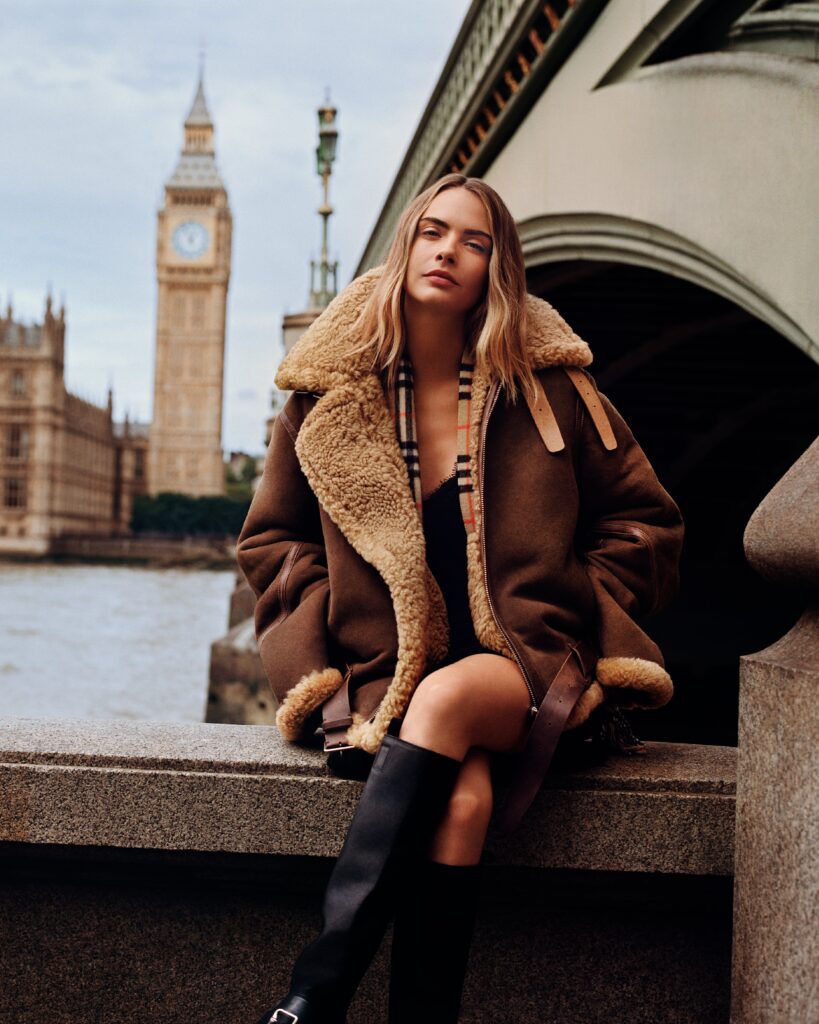
Burberry has announced plans to cut a potential 1,700 jobs worldwide as part of efforts to slash staff costs and return the luxury fashion brand to sustainable, profitable growth. The company said it was hiking its cost-cutting target to £100 million of savings per year by the 2027 financial year. These savings will partly come from a reduction in “people-related costs”, the firm said, which could affect around 1,700 jobs globally over the two-year programme. The British brand revealed it had tipped into a loss of £3 million in the year to 29 March 2025, swinging from a profit of £418 million the previous year. Burberry delivered revenue of £2.5 billion, with retail store sales dropping 12% compared with the previous year. It comes as the company weathers major trade disruption in China and the US, as well as an under-pressure luxury market. After a “challenging” first half, the British business launched a £40 million cost-cutting programme in November. As part of this, Burberry set out to reset brand storytelling, enhance visual merchandising, and align product focus. This resulted in a “significant” improvement in the second half of the year. The brand launched new marketing campaigns over the past year, enlisting the likes of actors Olivia Colman and Barry Keoghan, helping drive demand for its bestselling outerwear products. It also strengthened alignment between commercial and creative teams and evolved operating model to drive “simplification, increase agility and improve productivity”. Joshua Schulman, CEO at Burberry, said: “After a challenging first half, we have moved at pace to implement Burberry Forward, our strategic plan to reignite brand desire, improve our performance and drive long-term value creation. “With improvement in brand sentiment, we will be ramping up the frequency and reach of our campaigns as our Autumn and Winter collections arrive in store. The continued resilience of our outerwear and scarf categories reaffirms my belief that we have the most opportunity where we have the most authenticity. “While we are operating against a difficult macroeconomic backdrop and are still in the early stages of our turnaround, I am more optimistic than ever that Burberry’s best days are ahead and that we will deliver sustainable profitable growth over time.” Burberry’s share price has dwindled in recent months as the luxury brand took a hit in the aftermath of Donald Trump’s “liberation day” tariff announcements in April. Trump placed steep tariff rates on Chinese exports, which China reciprocated by hiking levies on US exports, raising fears about how trade between the world’s two largest economies will be affected. The brand has significant exposure to shoppers in Asia, and has been growing its sales in the US amid the popularity of its staple styles including trench coats and scarves. It had already been struggling against a slump in demand among shoppers in China, one of its biggest markets, which has been dragging heavily on sales. Nevertheless, Burberry previously said it was moving with “urgency” to turn the business around and return to profit, and that there were early signs these efforts were paying off – as suggested in today’s update. Looking ahead, the company will continue to build on the early progress of its turnaround strategy and expects to see the impact of these actions build throughout the year.

Burberry to cut up to 1,700 jobs as it targets return to profitable growth Read More »

The evolution of the bikini

Created almost 80 years ago, the bikini has been making waves as a summer essential since the 1940s. The late fashion editor Diana Vreeland called the bikini “the most important thing since the discovery of the atomic bomb”. Vreeland isn’t wrong, the two-piece swimsuit has lost none of its charm or scandalous appeal over the years. Never before in the history of fashion has a little piece of fabric caused such a stir. So, as we dust of our swimwear once again, here’s a look back at the evolution of the bikini. Models competing for the Miss World 1960 title in London (PA Archive) The origin of the bikini Ever since the mid-19th century, swimsuits have been gracing the waters of Normandy and Biarritz by the sea-bathing elite. But in the summer of 1946, a seismic shift in swimwear took place. Taking inspiration from the first American nuclear test at Bikini Atoll in the Pacific, French engineer-turned-textile-manufacturer Louis Réard dropped a fashion bomb on post-war France: the bikini. The original design of Louis Réard’s bikini in 1946 (Alamy/PA) While visiting the beaches of Saint-Tropez, Réard observed women folding down their swimsuits to get a better tan – this sparked his idea to create a swimsuit that left the midriff completely bare. The daringly minimalist design made its debut at Paris’s Molitor pool, modelled by Micheline Bernardini, a nude dancer from the Casino de Paris and the only woman willing to wear such a revealing piece. Comprising of just a few scraps of fabric printed with excerpts from Bernardini’s fan mail, the so-called “world’s smallest swimsuit” showed off her curves and – most shockingly – her navel. At the time, this part of the body was considered far too intimate for public display. The navel, tied symbolically to motherhood, was still seen as something that belonged to the private sphere. Brigitte Bardot wearing a bikini on the set of The Night Heaven Fell (Alamy/PA) Packaged in a tiny metal cube, just 6cm wide, and marketed as “the first anatomical bomb”, the bikini was set to challenge post-war modesty. Among its early champions was Brigitte Bardot, who made headlines in 1953 when she wore a a simple floral bikini on the beaches of Cannes. The 18-year-old actor’s youthful defiance helped turn the bikini into a symbol of a generation embracing freedom, pleasure and a rapidly changing consumer culture. 1960s Come the 1960s, bikinis were still enjoying a surge in popularity, despite still being forbidden on some European beaches. This was largely down to Hollywood. In the James Bond film Dr. No (1962), Ursula Andress stepped out of the sea wearing an iconic white belted bikini, and the moment certainly made waves. Channel 4 declared it to be the top bikini moment in film history, and in 2001, the bikini sold at auction for $61,500, being described by film writer Martin Rubin as a “defining moment in the Sixties liberalisation of screen eroticism”. Ursula Andress wore an iconic white belted bikini in the film Dr. No in 1962 (Alamy/PA) That same year, actor Sue Lyon lounged on the grass in a floral two-piece in Lolita, while Raquel Welch went primal in a fur bikini in One Million Years B.C. (1966). These unforgettable cinematic moments played a major role in popularising the bikini across the globe. In France however, the bikini didn’t fully catch up until 1968, when social rebellion and the rise of feminism helped rewrite the rules of how women dressed and what it signified. The bikini became ubiquitous in the late 1960s (PA Archive) No longer just a skimpy beach outfit, the bikini became a subtle act of defiance: a way for women to reclaim ownership of their bodies, ditch the outdated constraints of modesty, and move freely – whether swimming, sunbathing, or simply being. What was once scandalous had evolved into a symbol of liberation. 1980s By the 1980s, the bikini made up 20% of swimsuit sales, more than any other swimwear model in the US. However, as skin cancer awareness grew, sales of the skimpy bikini decreased dramatically. Suddenly, it was all about the high-rise one pieces. As athletic styles boomed – one-pieces came into vogue (PA Archive) Alongside one pieces, variations of the bikini became popular such as the ‘tankini’ and ‘camikini’ which featured long tops covering the midriff and finishing at the hip bones. Pamela Anderson and Yasmine Bleeth popularised the high-rise one piece in Baywatch (Alamy/PA) The likes of Baywatch’s Pamela Anderson and Sports Illustrated model Cindy Crawford became swimwear icons, wearing plunging one-pieces and high-rise bottoms. 1990s As simpler aesthetics began to define fashion and one-pieces became synonymous with Eighties athleisure – the bikini came back with a boom. In the 1990s, ultra-stylised bikinis became popular, moving away from 1980s athleisure (Stefan Rousseau/PA) This time, luxury labels began transforming the two-piece swimsuit into high-glamour statements. In 1996, Chanel shrank it down and stamped it with its signature logo, and paraded it down the runway on supermodel Stella Tennant.   View this post on Instagram   A post shared by Garment Modern+Vintage (@garment_modern) The following year, Tom Ford at Gucci took things even further with a barely-there ombré thong bikini adorned with a bold metal G – designed for all genders, and made to be seen. 2000s – present day Today, the bikini remains a controversial piece of clothing, still finding itself under censorship. In 2013, an advert featuring Pamela Anderson dancing in a bikini was banned by the British Advertising Standards Authority for degrading women. In that same year, Cambridge University banned the Wyverns Club of Magdalene College from arranging its annual bikini jelly wrestling contest. Modern day bikini designs have become more experimental (Myung Jung Kim/PA) But as designers become more inclusive and experimental with their designs – it seems the bikini has stepped into its golden age. A symbol of liberation and freedom – the bikini remains one of the most popular sectors of the fashion industry, being valued at around $811 million.

The evolution of the bikini Read More »

JD Sports and Wingstop launch crave-worthy trainer give away

JD Sports and Wingstop UK have unveiled a new partnership that brings together streetwear culture and crave-worthy food. The campaign, announced this week, offers sneakerheads and food lovers the chance to win exclusive kicks and Wingstop meals through a nationwide treasure hunt. This collaboration is more than just a promotional campaign, it’s a chance for shoppers to win a mix of cult-favourite sneakers and Wingstop’s signature flavours. As part of the promotion, which runs until 6 June, JD is offering fans the opportunity to score exclusive ‘Only at JD’ trainers from some of the biggest names in sportswear, including Adidas, Nike, Asics and New Balance. But that’s not all. Winners will also receive a £50 Wingstop UK voucher, giving them the perfect excuse to indulge in the wing experience it is known for. 500 bespoke 3D-printed miniature trainers have been hidden inside meals at 48 Wingstop UK locations nationwide. To participate, customers need to purchase the JD Full Flavour Fix meal (available for dine-in or takeaway) and hunt for the mini trainer hidden within. Each miniature trainer includes a unique QR code, which, when scanned, unlocks the chance to claim a full-size pair of e JD trainers and a £50 Wingstop UK voucher. With limited quantities available and high demand expected, the campaign serves as both a brand experience and a call to action — one that speaks to a generation passionate about taste, in both senses of the word.

JD Sports and Wingstop launch crave-worthy trainer give away Read More »

Marks & Spencer reveals customer data taken by hackers after cyber attack

Marks & Spencer has revealed that customer personal data has been taken by hackers after being hit by a damaging cyber attack. Chief Executive Stuart Machin said the data had been accessed due to the “sophisticated nature of the incident”, but stressed this does not include payment or card details, or account passwords. He has written to shoppers to alert them over the data breach, but said there is “no need for customers to take any action”. The high street chain did not say how many customers had been affected. In a social media post, Mr Machin said: “We have written to customers today to let them know that unfortunately, some personal customer information has been taken. “Importantly there is no evidence that the information has been shared and it does not include useable card or payment details, or account passwords, so there is no need for customers to take any action. “To give customers extra peace of mind, they will be prompted to reset their password the next time they visit or log on to their M&S account and we have shared information on how to stay safe online.” The group has not been able to take any orders through its website or app since April 25 as it tries to resolve the problem. The incident first caused problems for the retailer’s contactless payments and click and collect orders, while it has also impacted some availability in stores. A hacking group operating under the name Scattered Spider has been linked to the attack, according to reports.

Marks & Spencer reveals customer data taken by hackers after cyber attack Read More »

Review Your Cart
0
Add Coupon Code
Subtotal