Tech

LFW AW25: Sinead Gorey brings Irish pub culture to catwalk

An Irish pub – complete with pool tables, low lighting and bottles raised mid-walk – was not the most obvious setting for a London Fashion Week runway. But for autumn/winter 2026, Sinead Gorey made it the centrepiece. Staged in The Crypt at St James’s Church in Clerkenwell, the underground venue was bathed in a dim red light, evoking the atmosphere of a Nineties Irish local. Two pool tables lined the runway and a bar installation anchored the end of the catwalk, as a mash-up of Pixies, Joy Division and Pulp blasted through the space. Models occasionally paused to chalk a cue or take a swig from a bottle before continuing down the runway, blurring the line between performance and presentation. Models carried half-full beer bottles down the runway (Yui Mok/PA) For Gorey, whose work often draws on London nightlife subcultures, the pub represented both the beginning and end of a night out: “The pub,” she says, “honestly, nothing beats being wedged round a sticky table with your girls on a Friday, pint in hand, pretending you’re good at pool. Maybe it’s the half Irish thing, maybe it’s just in my DNA […] some people meditate, I go to the boozer.” On the runway, exaggerated hourglass silhouettes dominated in Gorey’s signature corsets. Shoulders were broadened, waists sharply cinched and hips sculpted, creating a severe silhouette that seems to be dominating the runways. Military details and corsetry dominated the collection (Yui Mok/PA) Military jackets, braiding and structured tailoring reinforced the power-dressing. Corsetry and bustled silhouettes were reworked in bonded Lycra, technical jersey and metallic finishes, fusing heritage femininity with contemporary fabrication. Exposed zips, studs and hardware buckles cut through more romantic elements, while fishnet panels and second-skin layers added a utilitarian edge. Fringe and furry trims – recurring trends across the London schedule – injected texture and movement under the low lighting. Ostentatious trims and metallics have cropped up on the London Fashion Week runways (Yui Mok/PA) The palette echoed the setting: stout blacks, bitter browns and oxblood reds were punctuated by pool-table greens and flashes of chrome. Glossy finishes suggested lacquered tabletops; heavy shearling and structured outerwear nodded to the reality of cold pavements outside the pub doors. A visible collaboration with Desperados ran throughout the show, with bottle caps repurposed into jewellery and hardware details. One model wore a belt designed to hold bottles, while another used a buckle-turned-bottle opener on the runway. At times the branding felt overt, but it aligned with Gorey’s unapologetically playful, irreverent aesthetic. A model wearing a beer bottle top-studded bag at the Sinead Gorey show (Yui Mok/PA) Footwear tapped into shared British and Irish nostalgia, with the classic Kickers Kick-Hi boots grounding many of the looks. Founded in 2019 with support from the British Fashion Council, Gorey’s label has built a recognisable identity around contemporary technical partywear, attracting fans including Miley Cyrus and Cardi B. This season, however, felt like a refinement of that formula. Many of the models stepped out in the classic Kickers Kick-Hi boot (Yui Mok/PA) The sex appeal remained but the tailoring carried more authority. The exaggerated silhouettes suggested confidence rather than chaos, hinting at a maturing vision. By reframing the Irish pub as a space of mythology rather than cliché, Gorey delivered a show that felt culturally specific yet broadly relatable. Beneath the theatrics of pool cues and pints was a considered exploration of where tradition, rebellion and femininity meet. If previous collections captured the chaos of the after-party, autumn/winter 2026 suggested Gorey understands that the stories shaping a night out often begin around a sticky table, under low lights, long before the club doors open.

LFW AW25: Sinead Gorey brings Irish pub culture to catwalk Read More »

LFW AW26: Dreaming Eli pushes corsetry to the extreme in exploration of female friendship

Dreaming Eli delivered one of the most striking and theatrical shows of the London Fashion Week schedule so far, presenting a collection of tight corsets, sheer tulle, lace and a stark palette of nudes and blacks. Founded in 2021 by Sicilian designer Elisa Trombatore, the London-based womenswear label has built its identity around the idea of clothing as both a political and personal statement. Deconstructed lace is a signature of Dreaming Eli (Ian West/PA) A graduate of Central Saint Martins’ MA Fashion programme, Trombatore centres Dreaming Eli on themes of female empowerment, sensuality and resilience, often drawing on her Sicilian heritage and its inherent dualities – softness and defiance, tradition and rebellion. That tension was palpable on the candlelit runway of her autumn/winter 2026 collection, The Court of the Maddest, Merriest Things Alive, at the Beaconsfield Gallery in London. The Dreaming Eli bride carrying an apple above her head, representing temptation (Ian West/PA) Raw-edged lace appeared coiled like twine around boned corsets, most notably in a sheer ivory strapless look where delicate black hook fastenings ran vertically down the torso. The corsetry was left deliberately exposed, with lace panels fraying into asymmetric garter details that trailed down the legs, creating a sense of controlled unravelling. Elsewhere, a sculptural cream gown paired a tightly ruched corset bodice with an exaggerated draped skirt, the volume gathered low at the hips. The model’s porcelain, doll-like make-up and towering white platform heels heightened the theatricality, evoking John Galliano’s Maison Margiela Artisanal 2024 couture show. One model carried an apple aloft – a subtle nod to myth and temptation – highlighting the collection’s tones of romantic folklore.   View this post on Instagram   A post shared by Maison Margiela (@maisonmargiela) A sheer blush gown offered a softer counterpoint. A structured corset, traced with black fastenings, gave way to layers of flowing tulle and lace sleeves that floated as the model walked, while a delicate butterfly rested in her hair. The look balanced transparency and structure, strength and fragility. In another standout moment, a model’s face was partially veiled in lace beneath a crown of thorn-like branches, the intricate headpiece lending a devotional, almost martyr-like quality. The garment itself was composed of cascading ruffles and exposed lacing running down the back, further emphasising Trombatore’s fascination with vulnerability made visible. The show closed with Trombatore herself joining a model on the runway, both dressed in corseted mini silhouettes – one in black lace, the other in ivory – underscoring the collection’s core message of solidarity and female strength. Designer Elisa Trombatore (right) and a model at the finale of the show (Ian West/PA) Models throughout emerged in lingerie-inflected silhouettes defined by structured corsets and sheer layering. Towering heels elongated the body while the corsets sculpted and at times distorted it, intensifying the collection’s architectural quality. Together, the looks displayed a sense of strength and delicate sensuality in equal measure. Romantic draping softened the severity. Silk and chiffon cascaded from tightly laced bodices, while Chantilly lace and tulle were layered to create depth and movement. In several looks, the corset acted as both centrepiece and anchor – pulling the waist inward before releasing into fluid skirts or trailing panels of sheer fabric. Corsets acted as a centrepiece for many of the looks (Ian West/PA) The silhouettes were unmistakably feminine but not passive. Bustled shapes and nipped waists have dominated the runway this season, while Trombatore’s decision to remain within a narrow palette amplified the construction, allowing precise tailoring to take precedence. While the looks were exaggerated, the show avoided tipping into excess, instead feeling intimate and self-aware, as though exploring the internal architecture of femininity rather than simply performing it. Dreaming Eli’s pieces are made entirely in London, with many incorporating lace-up adjustability designed to accommodate different body shapes and extend a garment’s lifespan. That emphasis on longevity and thoughtful construction aligns with Trombatore’s broader philosophy of clothing as an evolving companion rather than disposable spectacle. The collection received a standing ovation from many in the audience (Ian West/PA) Since launching at London Fashion Week’s Discovery Lab in 2021, supported by the Isabella Blow Foundation, the brand has steadily built international recognition. It now shows biannually on schedule and has dressed high-profile figures including Kylie Jenner, Lizzo and Julia Fox. Yet despite its growing profile, the label retains an exclusive quality. The sensuality remains central in this collection – sheer panels, exposed structure and sculpted waists are hallmarks of the brand – but there was a new assurance in the editing. The reliance on nude and black, the repetition of corseted forms and the commanding presence of towering heels reinforced a cohesive narrative.

LFW AW26: Dreaming Eli pushes corsetry to the extreme in exploration of female friendship Read More »

The creator economy’s ad revenue problem and India’s AI ambitions

The creator economy is evolving fast, and ad revenue alone isn’t cutting it anymore. YouTubers are launching product lines, acquiring startups, and building actual business empires. In fact, MrBeast’s company bought fintech startup Step, and his chocolate business is outearning his media arm. This isn’t just one creator’s strategy. For many, it’s the new playbook.  On this episode of TechCrunch’s Equity podcast, hosts Kirsten Korosec, Anthony Ha, and Rebecca Bellan unpack how creators are diversifying beyond ads, […]

The creator economy’s ad revenue problem and India’s AI ambitions Read More »

‘We’re all in this together’: BFC CEO Laura Weir leads LFW into new era of action, creativity and collaboration

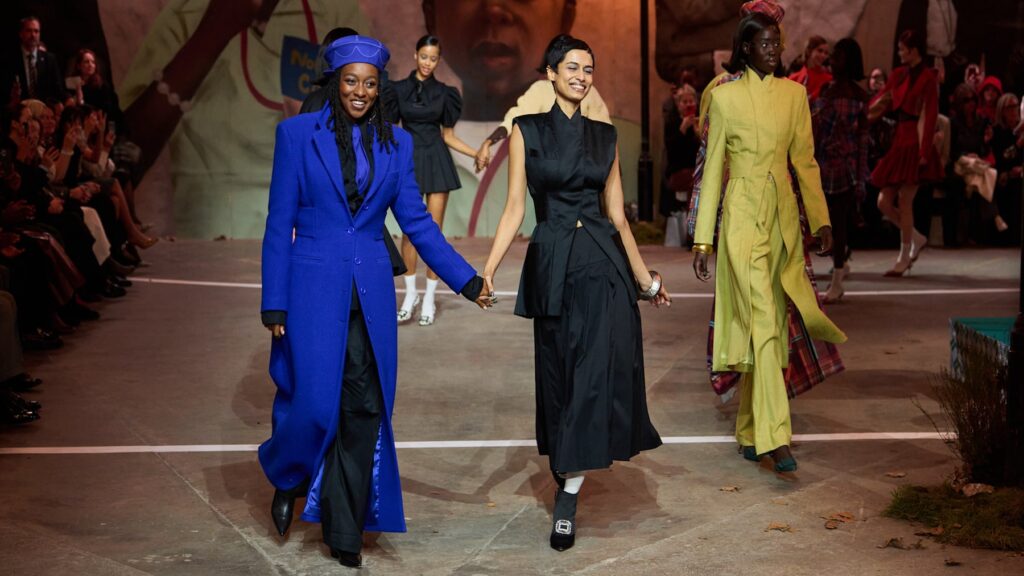
The AW26 season of London Fashion Week is underway, with Laura Weir, CEO of the British Fashion Council (BFC), officially opening the event with a rallying message of unity: “we’re all in this together” – a sentiment that underpins her mission to champion accessibility, cultural relevance and global visibility for British fashion. With a renewed focus on supporting British designers and strengthening London’s cultural influence, show fees remain waived for designers presenting physically on the main schedule. The British Fashion Council has also doubled its investment in its International Guest Programme this season, welcoming an expanded cohort of international press, cultural commentators and buyers to the city. “This is my second opening breakfast as CEO of British Fashion Council. And I have to say, standing here this morning feels very different to standing here six months ago, and not just because I was hanging out with the king yesterday,” Weir joked. “The last season was about listening. I was really new and I wanted to just hear everything, so I was asking a lot of questions and understanding what we really needed. And so this year, now six months on, is about actions. “Over the past half year, we’ve worked hard to reset the direction of the BFC and to reposition London Fashion Week, not just as a schedule of shows, but as a platform for growth, global dialogue, and creative and commercial authority, because London and British fashion matter.” She continued, referencing mounting global challenges and reinforcing the importance of coming together to celebrate what matters most. “In a global industry that’s consolidating, accelerating and polarising, it’s exceptionally tough and very confusing at the moment. Our responsibility as the British Fashion Council is really clear, in that it’s our job to support, defend and promote British fashion, and this year, you’re going to see some really tangible shifts,” Weir emphasised. She confirmed that a new strategy will launch “really soon”, alongside new systems and enhanced support structures, placing business incubation and designer development at the heart of the organisation. British Fashion Council CEO Laura Weir pictured with King Charles III at Tolu Coker AW26. This season’s London Fashion Week schedule features 90 designers and organisations. Highlights include 41 catwalk shows, 20 presentations, four appointments, 33 events and 19 digital activations. A key addition is the LFW Designer Showcase, a new platform designed to connect designers directly with local and international industry experts, reflecting a broader shift toward purpose-driven creativity with tangible commercial outcomes. Running until 23 February, the showcase spotlights designers at the forefront of British fashion, many of whom have progressed through BFC Foundation initiatives. Participants include Aaron Esh, Ahluwalia, Bleue Burnham, Clio Peppiatt, Clothsurgeon, E.W. Usie, Johanna Parv, Nicholas Daley, Steve O Smith, Talia Byre and Thevxlley. Culture is also in sharper focus this season. Chet Lo spotlights Asian makers through a dedicated market, while KNWLS returns with a “KNWLS Universe” pop-up celebrating fashion, art, food, music and literature in collaboration with its community. Nicholas Daley will host a pop-up showcasing his SS26 collection, bringing together craft, design and community. H&M Studio also returns with an immersive townhouse takeover. Beyond the official schedule, London retailers are staging complementary activations across the capital. Dover Street Market presents a BFC Jewellery Showcase, Selfridges curates a dedicated LFW edit, and British Vogue and Nike host a takeover at Corner Shop, adjacent to the BFC Newgen Show Space at 180 Strand throughout the week. “The participation continues to grow,” Weir noted. “We’re doing this together, and that’s why we’re taking off. So I’m really proud to announce that this February, we’re 21% up on activations on the schedule. “It’s our job to create flexible formats to showcase exceptional work and visions in environments that reflect open, transparent formats for the industry. So I’m really proud that it’s not just shows. There are events and retail openings and moments of commercial excellence and creative excellence too.” With an expanded schedule, new formats and strengthened cultural programming, London Fashion Week autumn/winter 2026 reaffirms its role as a platform for creativity and global cultural exchange.

‘We’re all in this together’: BFC CEO Laura Weir leads LFW into new era of action, creativity and collaboration Read More »

Review Your Cart
0
Add Coupon Code
Subtotal