

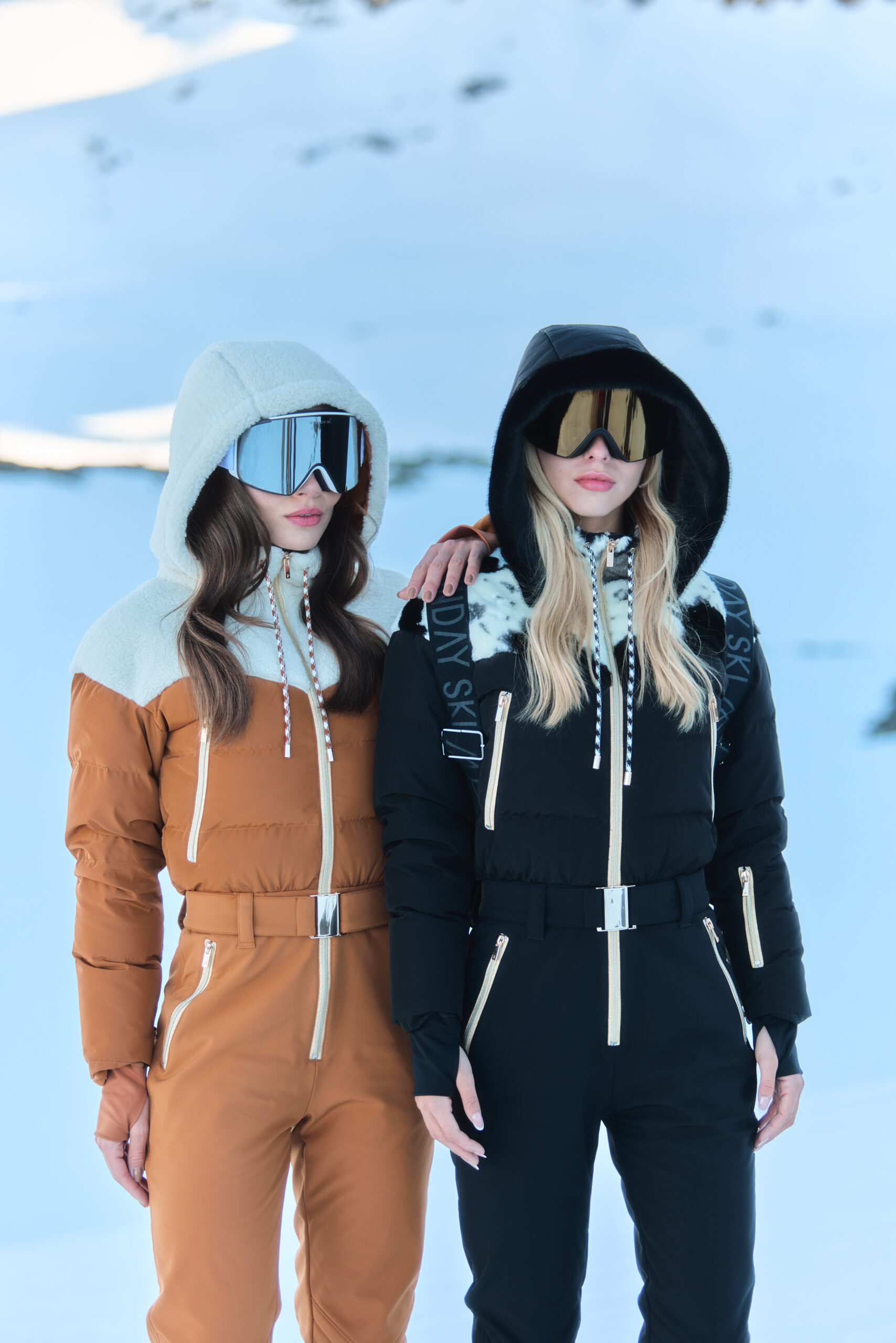
Cassie Easton and Ellie Lindsay-Wood both had successful careers in the beauty and luxury industries before taking the plunge into entrepreneurship in 2018. Avid skiers, the pair were inspired to set up their brand, My Sunday Ski, by a vintage ski-suit worn by Lindsay-Wood that was a big hit on the slopes.
Easton (above left) had previously enjoyed a successful career at upscale publisher Condé Nast – home to Vogue, GQ, Glamour and more – while Lindsay-West (above right) worked at beauty giants L’Oréal and Estée Lauder. Her most recent role at Charlotte Tilbury helped fire her ambitions as she embraced the legendary make-up artist and brand founder’s mantra of “dream, dare and disrupt”.
Their combined experience of scaling brands, international marketing and story-telling was poured into My Sunday Ski, which they established with a small family loan. The pair have not taken any further investment since, enabling them to retain full control of the brand and build it in an authentic and considered fashion.
An intimate knowledge of the ski scene helped them to understand exactly how to blend performance with style, and their aim is to make skiing accessible and welcoming to as many people as possible.
Today the predominantly DTC brand is on course to exceed sales of £7 million this season, and can be seen on some of the most high-profile women in snow sports, as well as on countless fans on ski slopes and après bars globally.
The pair talk to TheIndustry.fashion about establishing a brand – dependent on travel – while the pandemic was in full swing, how they have built their community, how they developed their product line-up and what their ambitions are for the future of My Sunday Ski.
I understand the brand was inspired by Ellie’s mother-in-law’s vintage ski suits. What was special about them – they must have been quite something if you decided to launch a brand inspired by them!
Cassie Easton (CE): Interestingly, it was actually just one suit – and while it was stylish, classic and beautifully made, it wasn’t wildly extravagant. What really stood out was the reaction it received. Every time Ellie wore it on the slopes, the response was completely disproportionate. It turned heads – not because it was loud, but because it had presence. People constantly stopped to ask where it was from, and in that moment, we realised women were still being asked to choose between performance and style.
As skiers ourselves, we couldn’t accept that trade-off. For us, technical performance has always been the non-negotiable foundation, but we felt strongly that women shouldn’t have to compromise on how they look and feel in order to get it. We saw a clear gap for skiwear that delivers in the toughest mountain conditions while still feeling modern and considered, and we decided to build what we couldn’t find.
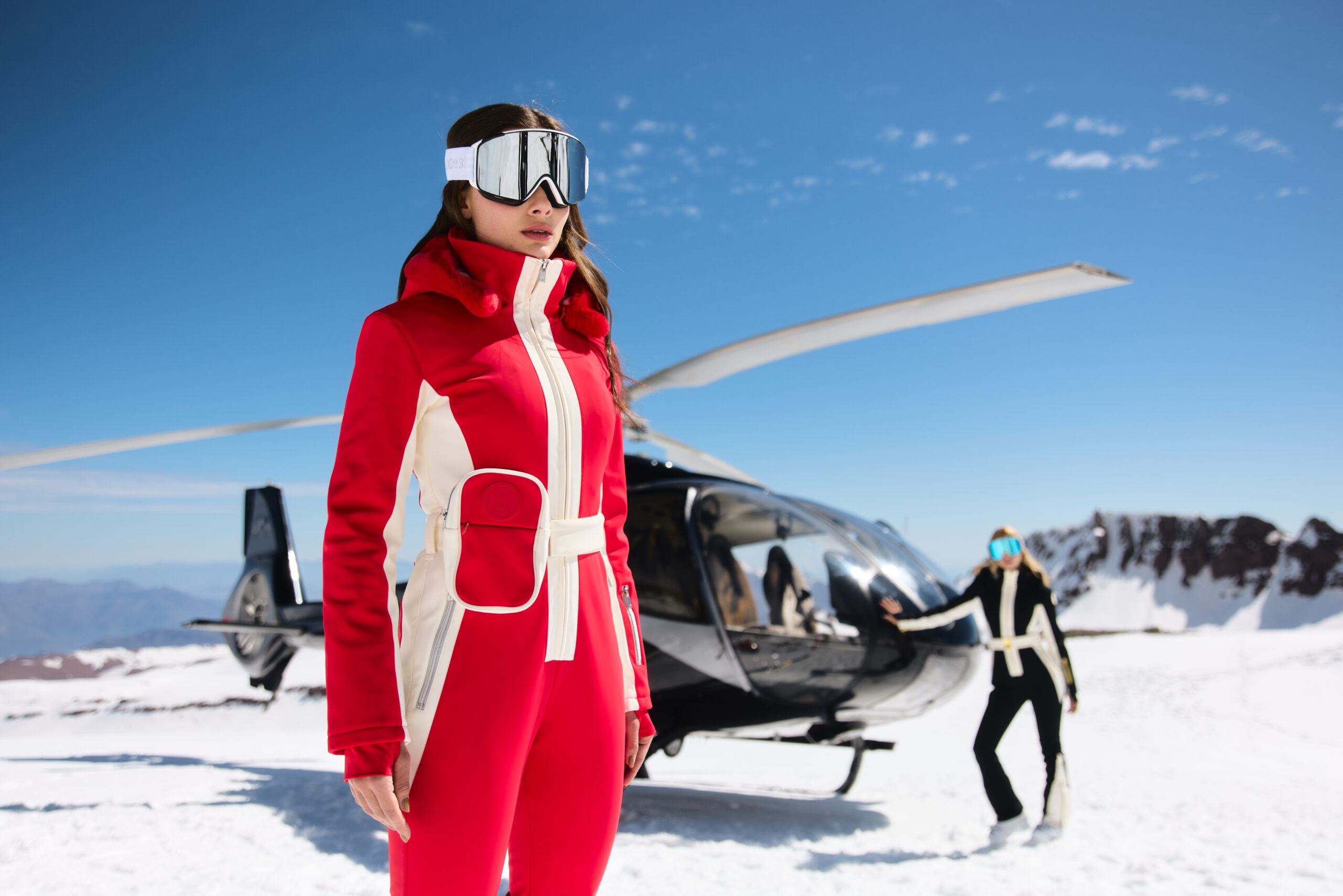
How did you go about setting up the brand. I understand you were funded by a family loan but how did you design, sample and manufacture the products?
Ellie Lindsay-Wood (EL-W): Perhaps surprisingly, the design element has always been the simplest part and our philosophy hasn’t really changed. From day one, we’ve created the pieces we ourselves dream of wearing on the slopes. Legacy skiwear brands were largely built around men’s performance needs and adapted later.
We approached it differently and designed from the female perspective first. Because we’re primarily direct-to-consumer, we’re able to stay very close to our customer – listening carefully, moving quickly, and designing for real women who ski, travel and live full lives beyond the mountain.
On the sampling and manufacturing side, it’s been about partnering with factories that are true experts in technical outerwear and then being relentlessly detail-focused throughout the process. We push back constantly until every element feels right.
Early on, we were fortunate to draw on my husband’s expertise, developed through years of experience in his family’s global sourcing business. His insight helped us navigate the complexities of technical production from the outset, and that support has continued to be invaluable as we’ve grown and refined our processes across the business.
Fit, in particular, is everything. Tiny adjustments – where seams sit, how insulation is distributed, how fabric moves with the body can completely transform how confident and comfortable a woman feels on the slopes.
What people don’t always see at first glance are the technical touches underpinning the fashion story: fully fleece-lined suits for warmth without bulk, carefully engineered internal features, and hardware that is both functional and elevated. Every decision is there to bring modern luxury to the mountain without compromising performance.
It must have been challenging to manage a start-up (particularly one centred on people being able to travel) during the Covid era, how did you manage it?
CE: It was certainly a challenging period but it ultimately made us far more resilient operators. We had only just entered our second full season when the pandemic began to disrupt global travel, but in many ways it forced us to build the business with real discipline from the outset. We had to navigate everything from Covid disruption and supply chain delays to rising tariffs and shipping costs – but rather than slowing us down, it sharpened how we operated. Being direct-to-consumer gave us agility, and we stayed incredibly close to our community, focusing on what they wanted both during and beyond lockdown periods. Crucially, we’ve always built the brand for the long term. Skiing is inherently cyclical, and we understood that demand would return strongly once travel reopened. By staying lean, protecting product quality and continuing to invest in the brand while others pulled back, we were able to keep scaling through a very volatile period.

What did the brand look like at the start and how did you market it?
EL-W: We launched with a very tight, focused collection – the ‘Luxe’ Ski Suit in three colourways – which quickly expanded to include our OG ‘Signature’ and ‘Élégance’ styles. From there, the collections have grown organically each season to include base layers, accessories and, ultimately, a full slope-to-chalet wardrobe.
From a marketing perspective, the early days were extremely hands-on. We didn’t have the luxury of big budgets, so it was about being very considered and intentional. We focused heavily on building our Instagram presence from the ground up, working closely with content creators we felt genuinely embodied the brand, and quite literally getting the product onto the slopes as much as possible.
That creator-first approach has remained a core part of our strategy as the brand has scaled. We spent a lot of time traveling, seeding product, and building real relationships within the ski and fashion community. That visibility on the mountain – ‘seeing the suits in the wild’ – was incredibly powerful for us early on.
A big part of that momentum also came from encouraging our customers to share their own content wearing My Sunday Ski, which we would then reshare across our channels. That authentic, community-led visibility created a real flywheel effect for the brand. Because we were so close to our customer from the beginning, we were able to learn quickly what resonated and double down on what worked.
That combination of community-first growth and highly visual product really helped accelerate early momentum.
How have you built the brand out in the intervening years and how do you decide which new styles/categories to add?
CE: A huge part of our growth has come from staying very close to our customer. We’re constantly listening to our community – what they’re wearing, what they’re asking for, and how they’re actually using the product on and off the slopes and that insight heavily informs how the range evolves. Alongside that, of course, sits careful forecasting and category planning to ensure each new addition earns its place.
What truly sets My Sunday Ski apart, though, is our nimble, responsive design model. As a primarily direct-to-consumer brand, we’re not locked into the long, rigid development cycles that many heritage skiwear brands operate within. That freedom allows us to react quickly not just to what’s happening on the mountain, but to wider fashion trends as they emerge.
Our drops are intentionally tight and highly curated, which means we can integrate trend-led ideas into technically credible skiwear far faster than traditional players. That ability to move at the pace of fashion, while still delivering serious performance, has been a key factor in positioning My Sunday Ski as a modern innovator in the category.
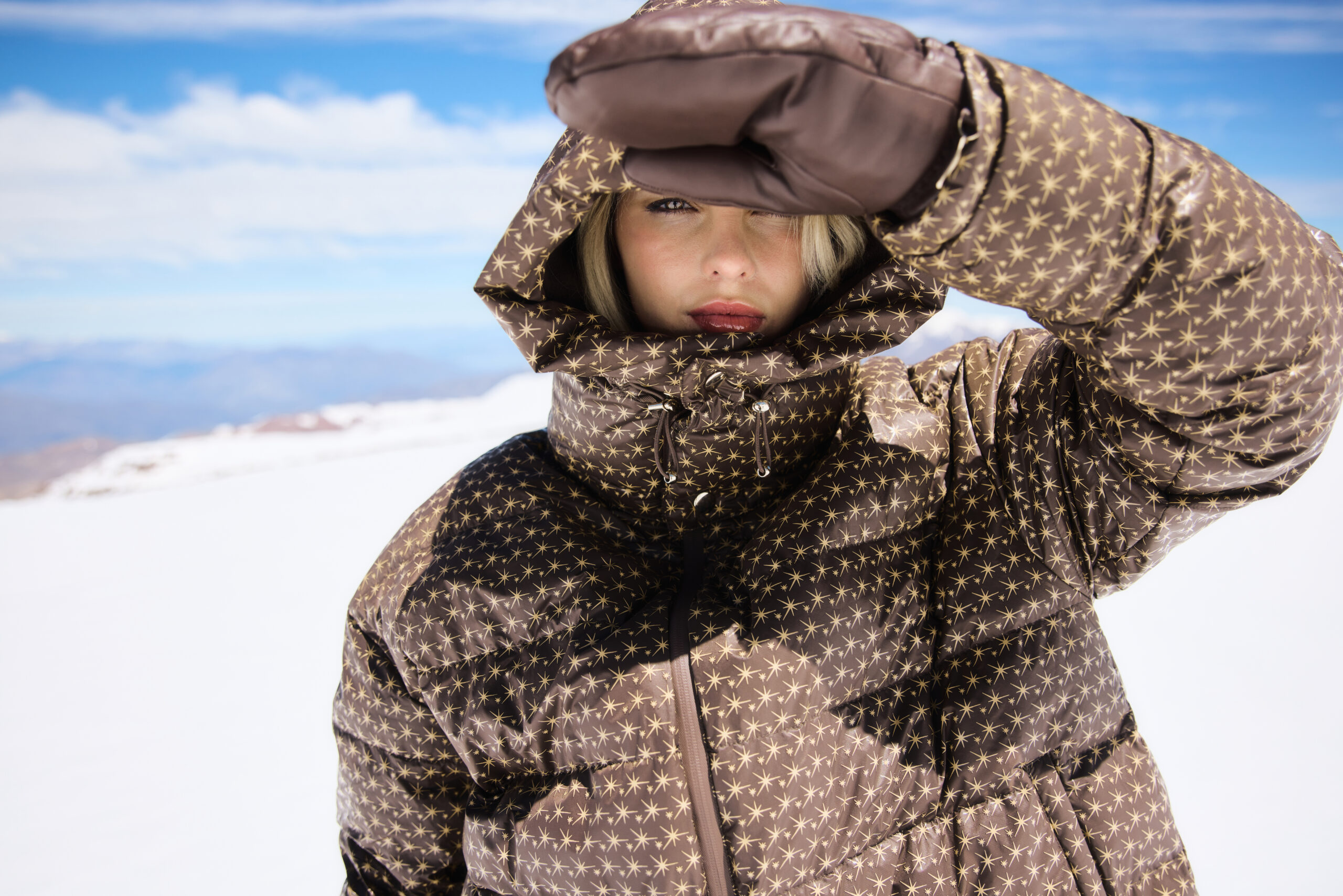
How would you sum up the aesthetic of the brand?
EL-W: We describe the My Sunday Ski aesthetic as playful and luxurious, sitting at the intersection of high fashion and high performance. Our pieces are engineered to perform in demanding mountain conditions, while feeling as considered and flattering as ready-to-wear.
At the heart of the brand is a clear mission: to help our customers feel beautiful and celebrate who they are – strong, free-spirited and thrill-seeking – without ever compromising on the technical protection and functionality serious days on the mountain require. It’s ultimately about removing the compromise between fashion and performance, and bringing a more modern, elevated energy to technically credible skiwear.
Clearly performance is key here, how are you testing the products and what key elements do you incorporate into the design for this?
CE: Performance is absolutely non-negotiable for us. We rigorously wear-test on the slopes ourselves and with our wider ski community, refining each piece through multiple sampling rounds to ensure it performs in real mountain conditions. Across the range, there are consistent technical foundations we never compromise on: fully fleece-lined interiors for warmth without bulk, ergonomic pocket and snow guard placement, considered insulation mapping, and wind and water-resistant fabrics that move with the body.
Beyond that, each collection is engineered with product-specific performance features. Our Zenith collection, for example, incorporates a full three-layer construction, 3M™ Thinsulate™ insulation, zip underarm vents and fully taped seams. The Muse collection features advanced snow guard technology, including the ability to zip directly into our Slalom ski pants to create a fully sealed barrier.
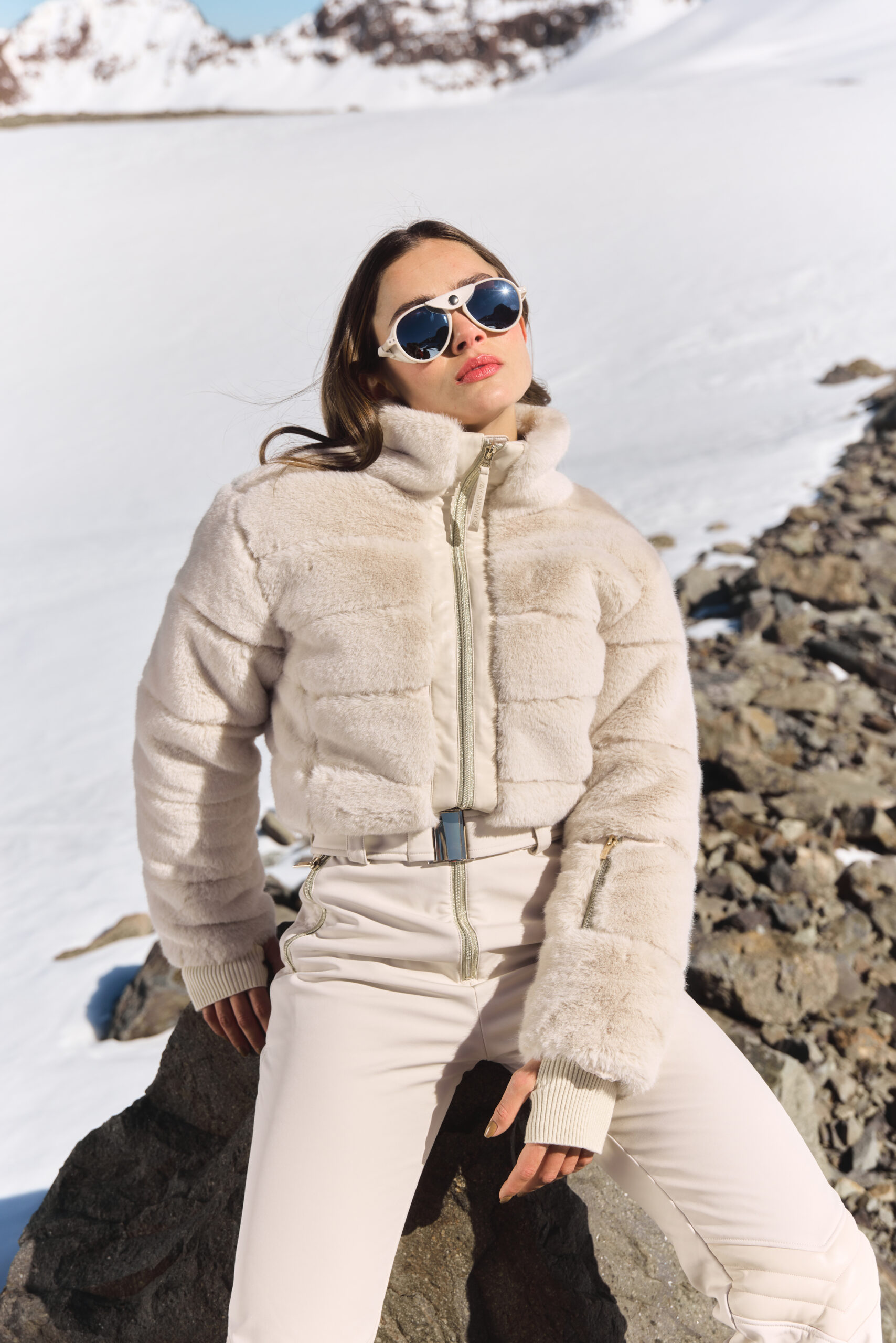
Even our most fashion-forward pieces are built to perform. Our faux-fur ski suit is a good example – people often assume it’s purely aesthetic, but it’s fully technical: water-resistant through membranes, insulated, breathable, and designed for real time on the mountain. We’ve always loved challenging the idea that performance has to look a certain way.
Obviously, skiing is seasonal. Is your business model built around that, or are you seeing demand year round? Or are you looking to add year-round product for instance?
EL-W: It’s a question we’re asked a lot. Naturally, our brand and the loyal following we’ve built do lend themselves to potential ‘seasonal’ extensions – categories like swim or activewear would feel like a very natural adjacency for us.
That said, we’re incredibly passionate about staying true to our niche. Technical, fashion-led skiwear is where we know we excel and where we believe we deliver real authority, so for now our focus remains firmly on continuing to lead and innovate within that space. Never say never, but any expansion would have to feel very considered and brand-right.
From a demand perspective, while the Northern Hemisphere winter is still our core trading period, we do see some off-season activity from Southern Hemisphere markets such as Australia and New Zealand although it’s not yet material to the overall business.
Historically, the seasonal nature of skiing allowed us to use the off-season to design, develop and prepare. As we’ve scaled, the business has naturally become more continuous in rhythm, but our strategic focus remains the same: staying disciplined within our niche while building long-term brand strength.
Can we talk about your customer base, how have you found and engaged with them?
CE: From the beginning, our starting point has been very personal – we design the clothes we ourselves want to wear. In many ways, we are not just the founders and designers, but also the customer, which has given us a very instinctive understanding of what women actually want from skiwear.
That closeness has naturally shaped how we’ve found and engaged our audience. Ellie and I have always featured heavily across our Instagram and brand storytelling – the women behind the brand as much as the brand itself – and that has created a genuinely two-way relationship with our community.
Alongside this, a thoughtful creator and influencer strategy has been instrumental in driving awareness and shaping brand desirability. From the outset, we focused on partnering with women who genuinely embodied the My Sunday Ski lifestyle, which helped position us very quickly as a go-to social brand within the ski space.
Importantly, this has been built entirely through organic relationships and product seeding rather than paid talent, which has kept the advocacy feeling highly authentic. In the early days, spotting a single My Sunday Ski suit on the mountain felt like a huge moment. Fast forward to this season, and it’s become part of our daily experience – customers coming up to us in hotels, on the slopes and in après, introducing themselves and sharing how they discovered the brand. It’s a feeling that’s genuinely very hard to describe.
More broadly, we believe brands that bring a more modern, fashion-aware perspective to the category are helping widen the entry point into snow sports. When design and storytelling evolve in this way, the mountain starts to feel less like a niche subculture and more like somewhere you can belong whether you grew up skiing or you’re stepping into rentals for the first time.
For us, performance isn’t only about technical stats; it’s also about comfort, confidence and self-expression. When women feel good in what they’re wearing, they stay longer, they come back and they bring friends with them. We’re proud to be part of a broader shift making the space feel more open, modern and accessible.
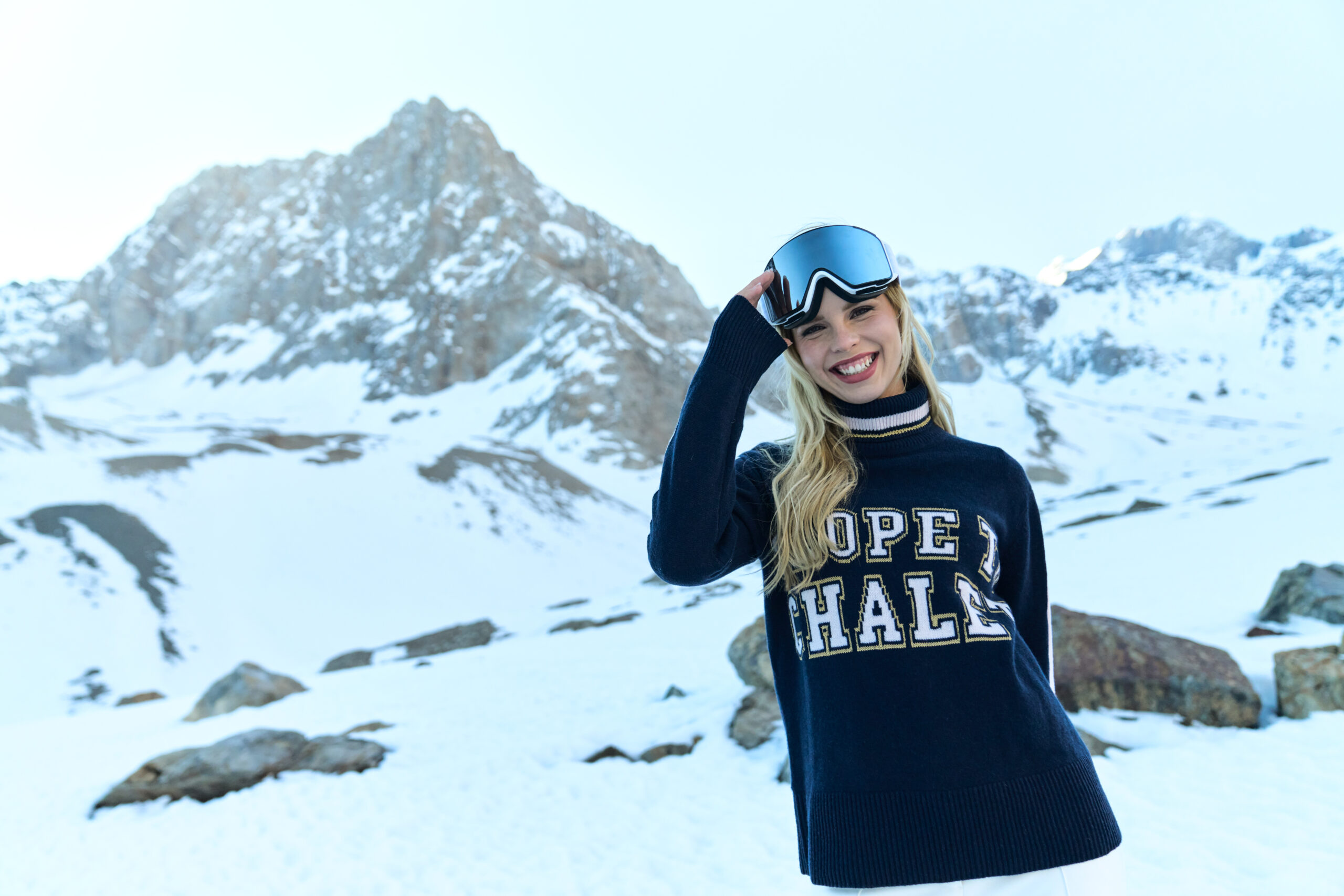
This brand seems to be built on virality and word of mouth, that isn’t something you can fake. What do you think it is about your brand that resonates so well?
EL-W: Yes, word of mouth and organic virality have absolutely been core to our growth, but very intentionally so. From the outset, we focused on building a product and a brand world that people would genuinely want to share, rather than trying to manufacture noise around it.
We’ve always believed that real traction comes from product truth first. When women feel confident, comfortable and a little bit special in what they’re wearing, they talk about it and that’s something you can’t manufacture.
Increasingly, we’ve seen that momentum build into a powerful flywheel: customers discover the brand in the wild, share their own content, and in turn bring new women into the community. That real-world visibility has been incredibly important for us. Women aren’t just seeing the suits online; they’re seeing them in lift queues, next to them on the chair lift, at lunch spots and in après.
At the same time, Ellie and I have always been very present across the brand’s social channels, which helps keep the relationship feeling human and two-way rather than overly polished or distant – something today’s customer is very quick to sense.
Ultimately, word of mouth only works if the product consistently delivers. Our focus has always been on creating pieces that perform beautifully and make women feel their best on the mountain – the rest tends to follow naturally.
You operate your DTC website and selected retailers. Tell us about distribution plans moving forward. Are you looking to expand that?
CE: Direct-to-consumer remains absolutely central to our model and is incredibly important to us strategically. It allows us to stay close to our customer and, crucially, to cut out the middle layers of traditional retail, enabling us to deliver luxury-level design and technical performance without the heavy markups that typically dominate the skiwear market. That discipline is a key part of how we’re able to operate at our price point and one of our core competitive advantages.
Importantly, this model means we are able to provide the same high-quality, technically credible products as many of the core heritage ski brands, but without the inflated price points that traditional wholesale structures often require. By cutting out unnecessary layers, we can pass genuine value back to our customer while maintaining the level of design integrity and performance we’re known for.
Alongside this, we’ve partnered with a very select group of strategic retailers, including Selfridges in the UK, Revolve in the US and Ounass in the Middle East – each for slightly different strategic reasons.
In our core markets, partners such as Selfridges and Revolve help build customer confidence through trusted retail authority, while platforms like Ounass support increased visibility and access in newer geographic regions.
We’re extremely considered in how we approach wholesale. Any partnership has to be highly aligned and additive, whether that’s through the authority of the retailer building customer confidence or through helping us gain visibility in non-core markets.
Our focus remains firmly on depth over breadth, working with a small number of best-in-class partners on tightly edited buys rather than pursuing wide distribution.
More broadly, we’re carving out a space that has historically been relatively untouched in the market: on one side, heritage ski brands commanding very high price points for exclusivity, and on the other, fast-fashion and high-street labels often compromising on quality and performance.
My Sunday Ski sits confidently in the middle offering technical credible skiwear that is also fashion-forward, accessible and enduring, and giving women the freedom to invest in pieces they’ll love season after season.
It’s unusual for a brand like yours to still be fully founder owned. Was it a conscious decision not to seek outside investment?
EL-W: Yes, very much so. The business was originally built from a £30k family loan and, to date, we’ve remained proudly founder-owned, split 50/50 between us. For us, maintaining that ownership has been about preserving clarity of vision and staying deeply embedded in every part of the brand.
My Sunday Ski has always been built in a very considered, product-first way, and being independent has allowed us to make long-term decisions without the pressure of external growth timelines.
We have also been profitable from day one, which has given us the confidence to scale on our own terms. Importantly, the model has proven itself.
We achieved 74% year-on-year growth last season and are currently tracking an 89% uplift season to date, putting us on course to exceed £7 million in revenue in the 2025/26 season. Our Black Friday performance alone surpassed £1 million in gross sales across the promotional period.
There are many ways to scale a business, often at the expense of short-term profitability or brand equity. For us, growing in a controlled and disciplined way has felt right – both personally and for the brand. In luxury particularly, scaling too quickly can risk diluting what makes a brand special, and we’ve always been very mindful of protecting that.
We’re in the midst of the Winter Olympics, does this event encourage more people to hit the slopes? Which events are you two most closely watching?
CE: Moments like the Winter Olympics are hugely powerful in reigniting interest in snow sports. They bring the mountains back into the cultural conversation and remind people of the energy, escapism and excitement that skiing offers. We often see a noticeable uplift in engagement and intent around these moments – not necessarily people becoming elite athletes, but more people feeling inspired to book a trip or return to the slopes.
More broadly, the increased visibility helps demystify the sport and makes it feel more accessible to a wider audience, which is incredibly positive for the long-term health of the category.
We’re genuinely hooked on all of it, but Lindsey Vonn’s return to Olympic competition in the women’s downhill was especially compelling to watch. While it may not have ended the way she hoped, her fearless spirit and determination to come back after so many years away really capture what makes winter sport so powerful and inspiring.
We also feel very connected to the space through the athletes we work with. We consistently dress Aimee Fuller, two-time Team GB Winter Olympian and broadcaster, and have worked with Olympic mogul skier Léa Bouard, who has even coached guests on our ski trips. Most recently, we contributed to the styling of Channel 4’s Winter Paralympics campaign, dressing Paralympic champion Alice Tai – so we’ll be following the Winter Paralympics particularly closely this season too.