
After leading sales and product development roles at True Religion, Red Card, and Rag & Bone, Tsuyoshi Kikushima is redefining classic Japanese denim with softness, soul and modern cuts, with his own brand Needby Vintage.
Give us an overview of your career so far and what has led you to launch your own brand.
My career began with experience on both sides of the industry: sales and manufacturing.
While working directly with customers in the marketplace, I was also deeply involved in the production sites of Japanese denim. That dual perspective has shaped my approach to making things.
In the brands I previously worked on, offering products at a price that made sense in the market was always a fundamental premise. This is an essential condition for a brand to remain sustainable and credible in the long term.
On the other hand, even when we wanted to devote ourselves fully to fabric development and processing techniques, there were unavoidable limitations from a cost perspective.
Japan possesses techniques and sensibilities that stand as an extraordinary exception on a global scale. From yarn engineering and weave structures to the subtlety of finishing, these qualities deserve to be pursued beyond conventional constraints of price and efficiency.
“What could we achieve if there were no such constraints?”
That question became the starting point of NEEDBY VINTAGE.
Rather than denim that asserts itself through weight or ruggedness, we set out to create denim that balances softness with depth—selvedge denim that remains supple, and that maintains a calm, cohesive expression even when extensive processing is applied.
Instead of overtly showcasing Japanese craftsmanship, we chose to let it reside quietly within the product itself, presenting a standard that can stand on a global level.
NEEDBY VINTAGE exists as an extension of my previous experience, while at the same time moving beyond its limitations. It is a brand born to fully realise Japanese technique and sensibility, free from conventional constraints.
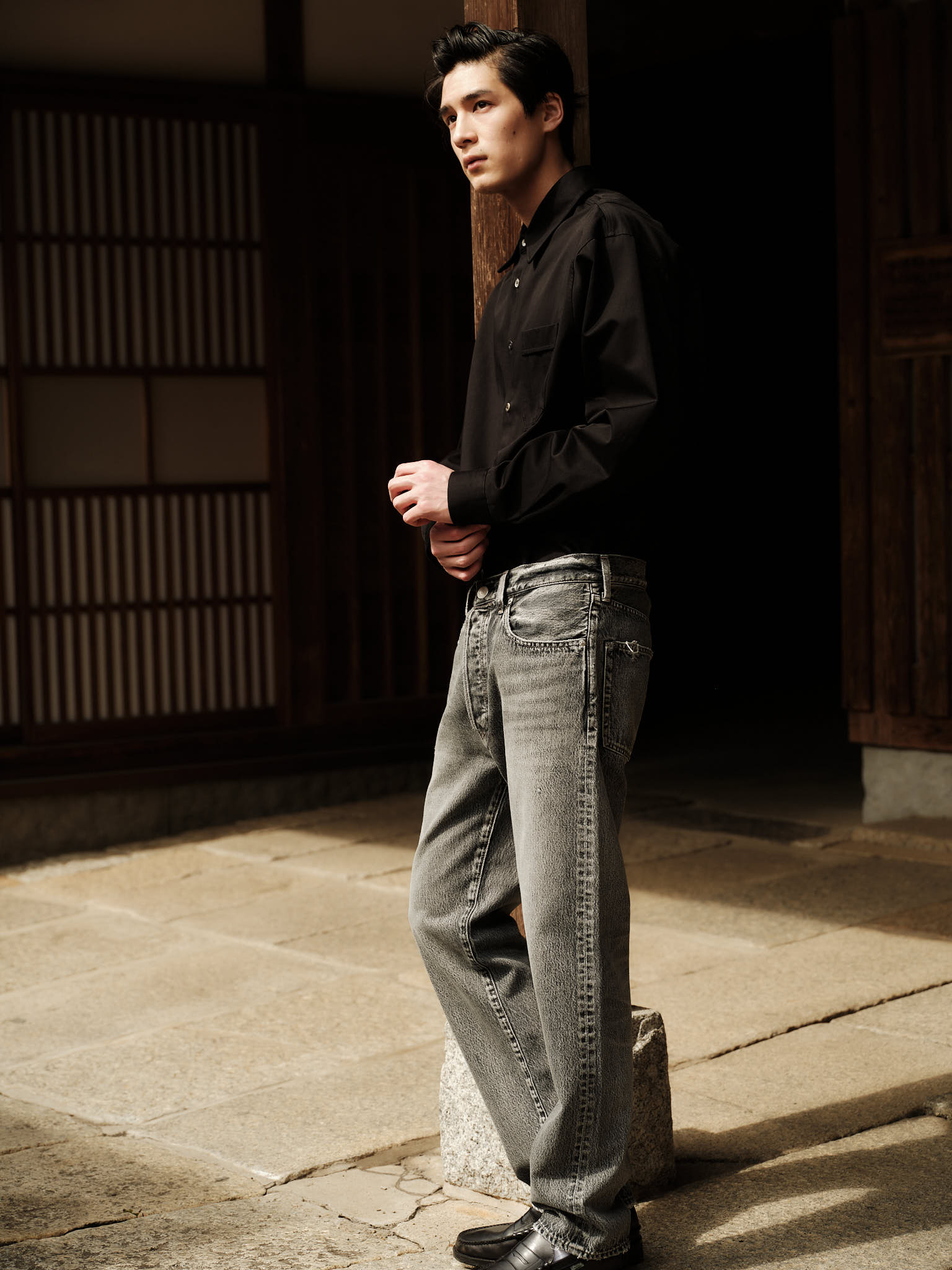
History and craftsmanship is at the heart of Needby Vintage. Take us through your “slower and deliberate” production process.
In today’s manufacturing environment, labour is limited, and improving efficiency is an unavoidable challenge. We continually reassess areas where processes can be rationalised, as long as quality is not compromised.
However, we do not pursue uniformity simply in the name of efficiency. There are expressions and nuances that can only emerge through handwork.
What machines can do, we leave to machines. But textures and tonal depth that only human hands can impart are entrusted to human sensibility until the very end.
That distinction defines NBV’s approach to making things. We pursue efficiency and precision simultaneously, while intentionally taking time on the processes that can only be realised by human hands.
We do not take pride in doing everything by hand. Rather, we take responsibility for discerning which processes must be done by hand.
You’ve created an exclusive selvedge denim ‘N1V-SO’. Why was this important for you?
Selvedge denim itself is not particularly rare. Traditionally, however, it has often been discussed in terms of weight, ruggedness, and pronounced vertical fading – qualities that sat at some distance from the direction we were aiming for.
What NBV sought was not heaviness, but depth; not rigidity, but suppleness.
Rather than selecting an existing fabric, we reconsidered everything from yarn combinations to weave design. Our objective was to create selvedge denim that feels soft and fluid, yet retains depth and richness in its expression.
When it comes to vertical fading—often regarded as a symbol of vintage denim—we chose not to emphasise it through strong linear contrast. Instead, we focused on building depth through texture and subtle tonal shading, aiming for an expression that settles quietly rather than asserting itself.
For us, fabric is not a surface element, but the very foundation upon which every product is built. With that in mind, we defined the direction at the fabric stage so that any silhouette or processing could stand on its own.
The original selvedge denim was not created as a means of differentiation alone; it serves as a tangible expression of NBV’s philosophy.
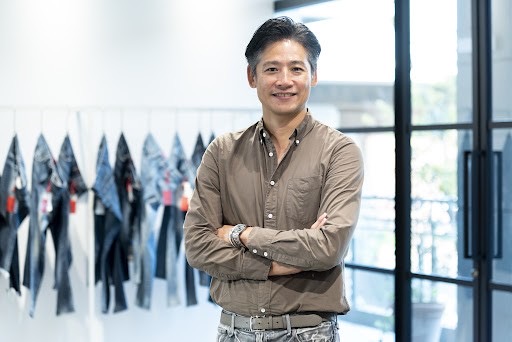
Tsuyoshi Kikushima, founder of Needby Vintage
Your production process is so unique, and can take up to a 6 month leadtime for a product. Talk me through the process and how you plan for demand.
NBV does not operate its own factory; instead, we share production backgrounds with multiple other brands. As a result, we cannot occupy a production line on a constant basis.
Each product begins with fabric design, followed by sewing, processing, and finishing. Because each stage requires specialized expertise, the process does not move forward in a single continuous flow. Adjustments and waiting periods inevitably occur between stages, meaning that some products take up to approximately six months to complete.
It would be possible to compress production into three to four months. However, for products involving complex processing and finishing, prioritising speed can cause decisions to become rushed, compromising precision in the details. To avoid that risk, we intentionally build generous timelines into the schedule.
In terms of demand forecasting, we do not assume mass production. We first determine appropriate quantities, then establish production plans accordingly. Rather than pursuing rapid expansion, we prioritise operating at a scale that allows us to maintain quality.
For NBV, time is not merely lead time; it is a fundamental requirement for sustaining the level of precision we demand.
You truly are creating pieces of art, one-offs if you will, with all of your shaving for example, done by hand. This is commendable, but is it sustainable long term, in terms of growth for the brand?
Laser processing has become the global standard for shaving due to its stability and efficiency. From a rational standpoint, it is an effective method.
However, in terms of subtle shading and three-dimensional expression, we still believe that handwork offers a level of sensitivity machines cannot yet replicate. Slight differences in pressure or angle can significantly affect the final impression.
For this reason, NBV carefully distinguishes between processes that can be handled by machines and those that require human hands. We are not attached to doing everything manually; we preserve time and sensibility only where it is essential.
At the same time, we recognise that mechanisation will continue to advance. To build a sustainable production system, efficiency cannot be ignored.
Factories are now working daily to bring laser processing closer to the nuance of hand shaving. In Japan, there is a strong craftsman’s mentality that seeks expression even through machines. Through this accumulation of effort, we believe more natural and dimensional results will soon be possible.
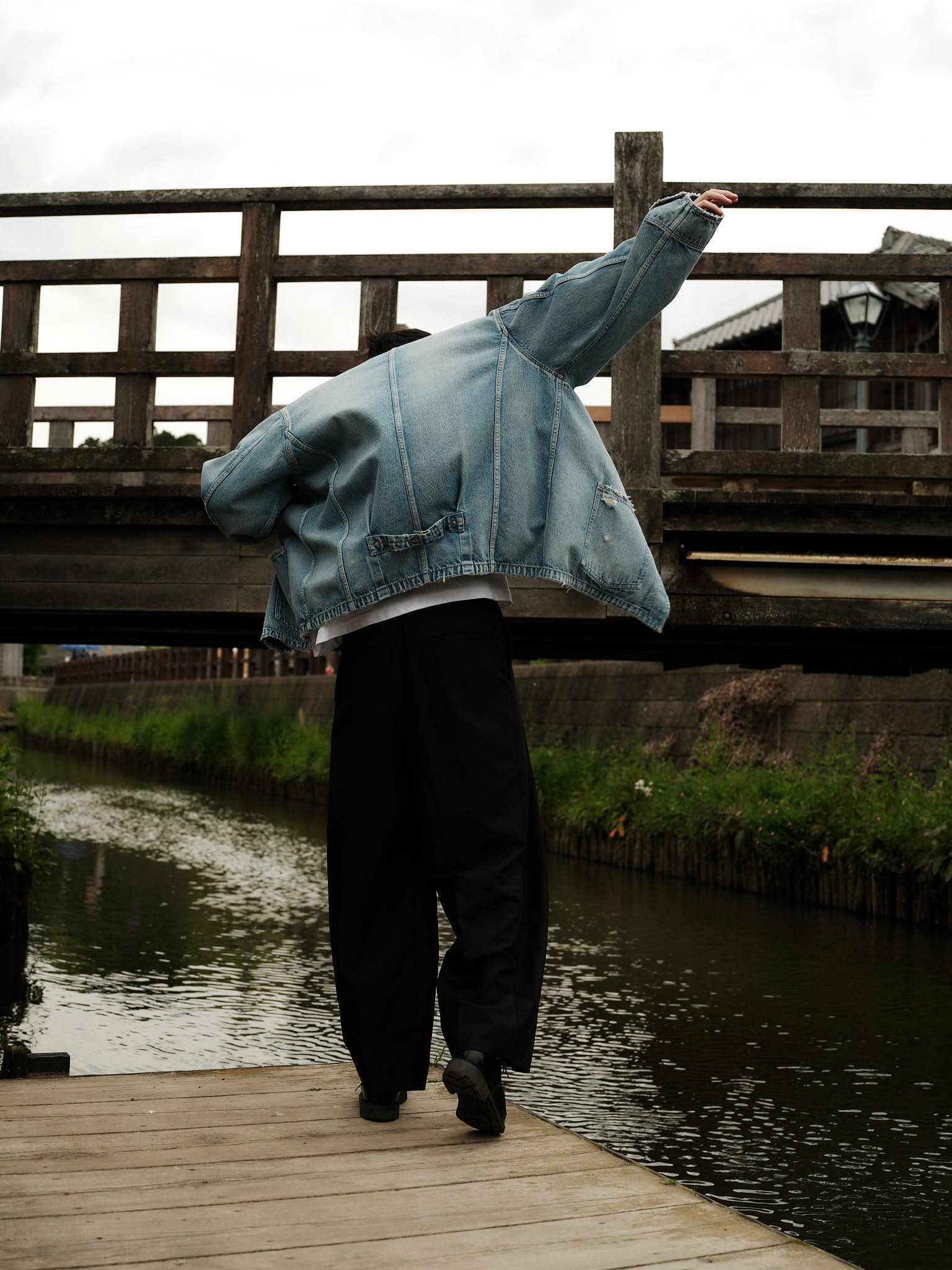
What are your plans for the UK market in terms of retail?
We see the UK as a mature market that values tradition and modernity in equal measure. Its deep understanding of craft, combined with openness to contemporary interpretation, aligns closely with our brand’s philosophy.
Rather than pursuing rapid expansion, we prioritise working with retailers who can share not only the product, but the brand’s worldview behind it.
Our initial focus is on London, engaging with discerning select shops and department stores step by step. Instead of scale or quantity, we emphasize where the brand is shown and how it is experienced.
We view the UK as a long-term market. We aim to develop the brand in a way that allows its value to be naturally embraced through the product itself and the worldview it represents, over time.
Taking the hand-made manufacturing and sustainable practices into account, how do you keep the jeans so well priced and do you think this will change once you grow internationally?
Our ability to maintain current pricing is supported by a broader business foundation, as we operate multiple denim brands. By securing stable production volumes over time, we build long-term relationships with factories, enabling cooperative pricing structures.
International expansion may introduce regional differences due to exchange rates or logistics costs, and rising material and labor costs are also affecting manufacturing globally.
That said, our standards will not change. Pricing is inseparable from a brand’s philosophy. We are committed to delivering appropriate value at an appropriate price, with a long-term perspective.
Let’s talk marketing. How are you acquiring customers?
NBV is still a newly launched brand. Rather than relying on large-scale advertising, we prioritise allowing people to encounter the brand through the product itself.
In Japan, we have held pop-up stores at Estnation, valuing direct interaction with customers. Through touch and wear, our philosophy and material quality are naturally understood.
Our idea of “new vintage” is not communicated through words alone, but is experienced through the product itself. That resonance is something we perceive directly in our interactions with customers.
NBV’s approach to marketing does not begin with reaching the widest audience, but with communicating meaning and values in depth.
Your brand is truly sustainable. What other brands do you admire in the market today?
Many brands today use the word “sustainable.” Rather than treating it as a slogan, we see it as the accumulation of daily, deliberate decisions—from production volumes and material choices to pricing structure.
The brands we respect are those that continue without compromising their own standards, regardless of scale or visibility. We resonate with brands that clearly define what they choose to do, and what they choose not to do.
Likewise, we prioritise quality and precision over short-term growth. We believe that this steady commitment ultimately leads to genuine sustainability.
With such a strong brand identity, would you collaborate with other brands in the future and any brands you think would be a great fit for Needby Vintage?
At present, there are no plans that move forward with collaboration as a premise.
Our priority is to firmly establish our foundation. Expanding before a brand’s contours and values are fully understood risks diluting what we truly seek to communicate.
That said, we are not opposed to collaboration in principle. If, through a natural course of events, we encounter a partner whose values and approach to making align with ours, it is something we would consider.
What matters to us is not attention or headlines, but whether there is a genuine sense of inevitability. If a relationship can exist while fully preserving NBV’s standards, then we believe there is potential.